DRAWING LIFE by fred hatt

2013/07/05

Night Light

Filed under: Photography: Light — Tags: , , , , , — fred @ 23:09
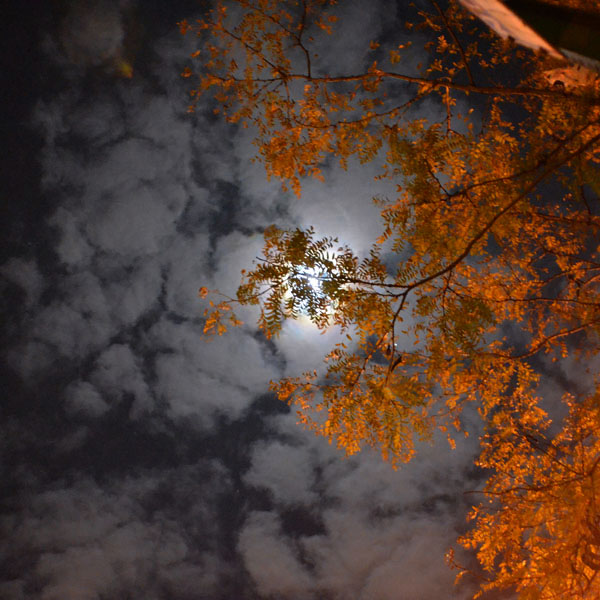
Tree and Moon, 2011, photo by Fred Hatt

Tree and Moon, 2011, photo by Fred Hatt

This is a post about the beautiful effects of artificial light photographed outdoors at night in New York City, one of the kinds of visual essays I’ve often featured on Drawing Life. It has nothing to do with the art I’m working on now. In recent months, I’ve been busier than ever with paid work as a projectionist, photographer, and videographer, and I’ve been using the improved cashflow to keep myself busier than ever with drawing and filmmaking. I’ve been doing consistent experimental figure drawing work in my studio with a few wonderful model-collaborators, pursuing fresh developments in the practice – but I’m not ready to show this work yet. Nowadays people tend to share every new thing in their lives immediately on Facebook or Twitter, but I think there’s something to be said about the old approach of laboring in obscurity and then going public with something fully-formed. I also have new video projects in the works, also not ready to share. In the meantime, I’ll keep the blog going with the kinds of posts you’ve come to expect, with new posts a little less frequent than they have been in the past. The new work will come out when it’s done.

So for now, please join me on an urban nocturne. Let’s go for a night drive.

Self Portrait Driving, 2012, photo by Fred Hatt

Self Portrait Driving, 2012, photo by Fred Hatt

The Sun, when it’s up,  is such an alpha dog that all other lights are wheezing three-legged omega chihuahuas at best. But at night there are billions of light sources, and all of them coexist in a Milky Way of rough equality.

Expressway Lights, 2013, photo by Fred Hatt

Expressway Lights, 2013, photo by Fred Hatt

All these little lights make their own pools and shadows, vie with each other and merge with each other. If the Sun is God, all the little lights are like God’s creatures, tiny emanations or embers of the Great Fire, mobile and competitive, transient and ephemeral.

Queensboro Bridge Onramp, 2012, photo by Fred Hatt

Queensboro Bridge Onramp, 2012, photo by Fred Hatt

The beams of night shine in a world of swirling particles.

Headlights in Snow, 2013, photo by Fred Hatt

Headlights in Snow, 2013, photo by Fred Hatt

Taxi and Bikes, 2012, photo by Fred Hatt

Taxi and Bikes, 2012, photo by Fred Hatt

Daylight is objective in its distance. Daylight shadows are orthographic projections – every beam of light that forms them comes from the same direction. Shadows formed by artificial lights at night have perspective – they expand with distance from the source of light.

Leaning Meter, 2013, photo by Fred Hatt

Leaning Meter, 2013, photo by Fred Hatt

Light sources at night often strike surfaces at oblique angles that reveal texture.

Blue and White, 2012, photo by Fred Hatt

Blue and White, 2012, photo by Fred Hatt

Brick Wall, 2012, photo by Fred Hatt

Brick Wall, 2012, photo by Fred Hatt

Nearby light sources sometimes impart a looming quality to architectural forms that would look stolid and stodgy in sunlight.
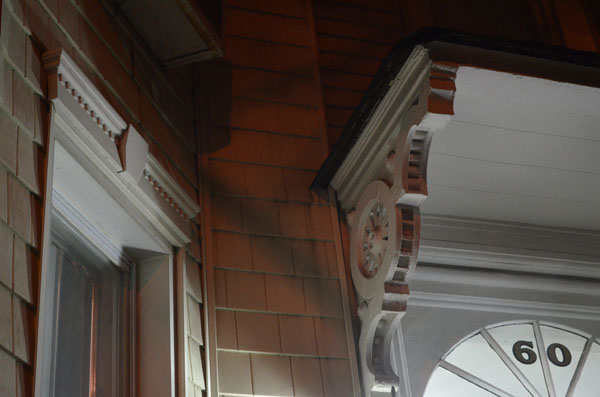
Architectural Elements, 2013, photo by Fred Hatt
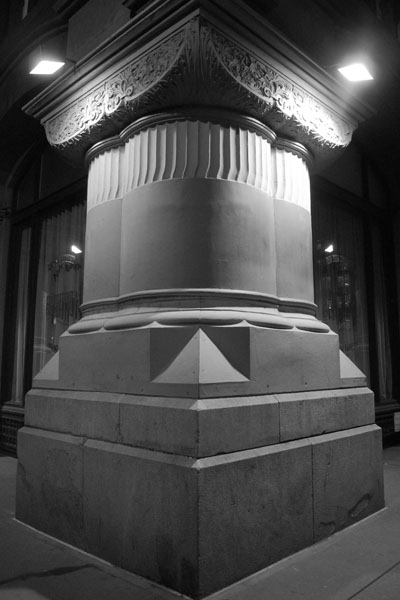
Architectural Elements, 2013, photo by Fred Hatt

Squat Column, 2011, photo by Fred Hatt

Squat Column, 2011, photo by Fred Hatt

Neo-Romanesque, 2012, photo by Fred Hatt

Neo-Romanesque, 2012, photo by Fred Hatt

Church Door, 2010, photo by Fred Hatt

Church Door, 2010, photo by Fred Hatt

Escalator, 2013, photo by Fred Hatt

Escalator, 2013, photo by Fred Hatt

At night, reflective surfaces make beautiful landscapes out of the multitude of little light sources, and light shining out of interior spaces gives simple boxes a magical aura.

Reflections on Metal, 2013, photo by Fred Hatt

Reflections on Metal, 2013, photo by Fred Hatt

Food Cart, 2011, photo by Fred Hatt

Food Cart, 2011, photo by Fred Hatt

Taco Cart, 2012, photo by Fred Hatt

Taco Cart, 2012, photo by Fred Hatt

Cylindrical Windows, 2012, photo by Fred Hatt

Cylindrical Windows, 2012, photo by Fred Hatt

Plaza Fountain, 2010, photo by Fred Hatt

Plaza Fountain, 2010, photo by Fred Hatt

The sheen of reflective surfaces overcomes the surface details that might dominate our perception in the flat light of day.
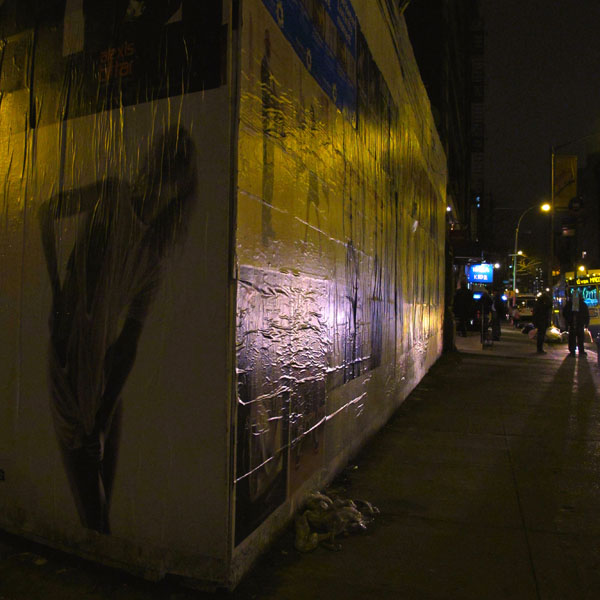
Shiny Posters, 2010, photo by Fred Hatt
Shiny Posters, 2010, photo by Fred Hatt

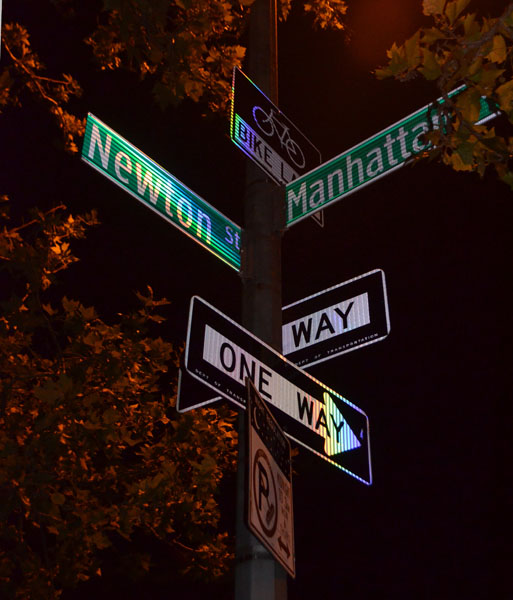
Retroreflective Signs, 2012Tree Shadow, 2010, photo by Fred Hatt

Retroreflective Signs, 2012Tree Shadow, 2010, photo by Fred Hatt

Burning Bush, 2013, photo by Fred Hatt

Burning Bush, 2013, photo by Fred Hatt

In the daytime, buildings are external structures, but at night they turn inside out, light revealing the life within.
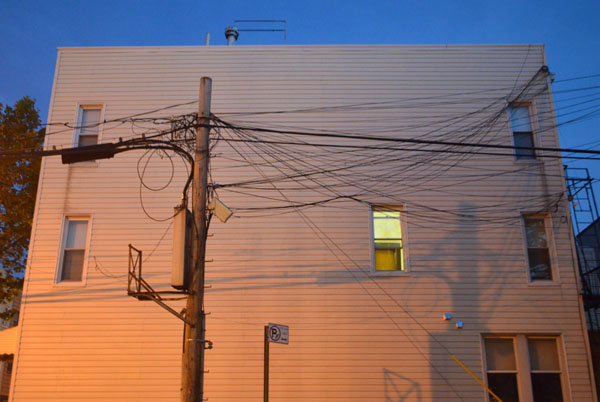
Pole and Wires, 2012, photo by Fred Hatt

Pole and Wires, 2012, photo by Fred Hatt

Metro, 2012, photo by Fred Hatt

Metro, 2012, photo by Fred Hatt

Office Building, 2012, photo by Fred Hatt

Office Building, 2012, photo by Fred Hatt

A city comes alive at night when light makes the insides of buildings more prominent than their outside forms.

Guitar Shop, 2013, photo by Fred Hatt

Guitar Shop, 2013, photo by Fred Hatt

Cheesesteaks, 2013, photo by Fred Hatt

Cheesesteaks, 2013, photo by Fred Hatt

Square of Light, 2013, photo by Fred Hatt

Square of Light, 2013, photo by Fred Hatt

A sufficiently long-exposure photograph of a landscape taken under moonlight looks barely different from one taken under sunlight. Artificial light, though, comes from various different directions and has many different colors. A long exposure taken at night under multiple artificial light sources is a kind of light painting.

Garden at Night, 2010, photo by Fred Hatt

Garden at Night, 2010, photo by Fred Hatt

Vacant Lot at Night, 2013, photo by Fred Hatt
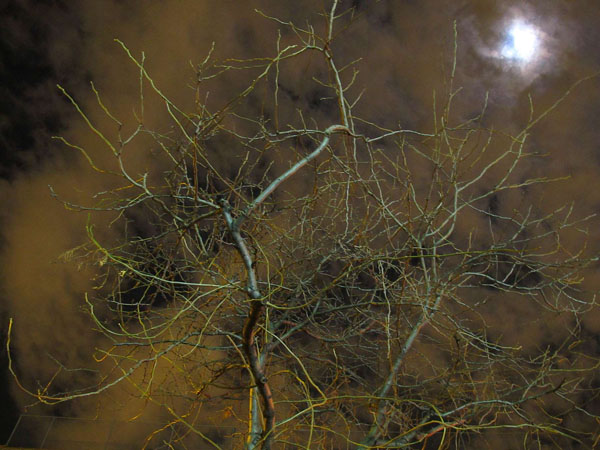
Vacant Lot at Night, 2013, photo by Fred Hatt

Winter's Moon, 2010, photo by Fred Hatt

Winter’s Moon, 2010, photo by Fred Hatt

Polish Crests, 2012, photo by Fred Hatt
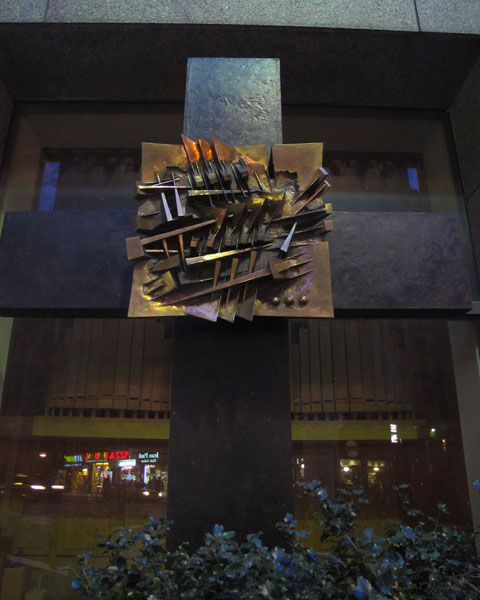
Polish Crests, 2012, photo by Fred Hatt

Abstract Cross, 2012, photo by Fred Hatt

Abstract Cross, 2012, photo by Fred Hatt

Colored lights, in the form of neon signs and tinted bulbs, make the night psychedelic.

Primary Hues, 2013, photo by Fred Hatt

Primary Hues, 2013, photo by Fred Hatt

Kellogg's Diner, 2013, photo by Fred Hatt

Kellogg’s Diner, 2013, photo by Fred Hatt

Red Neon, 2010, photo by Fred Hatt

Red Neon, 2010, photo by Fred Hatt

Christmas Lights, 2010, photo by Fred Hatt

Christmas Lights, 2010, photo by Fred Hatt

In the daytime, a hole in the ground is a black void, but at night, lit-up interiors and exteriors coexist and interpenetrate. A thousand tiny lights equalize space.

Restaurant Basement, 2013, photo by Fred Hatt
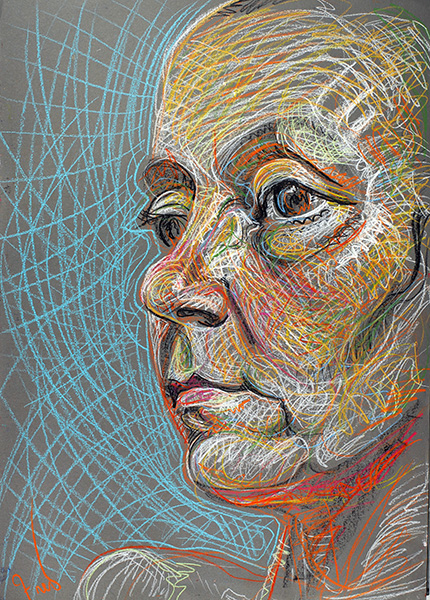
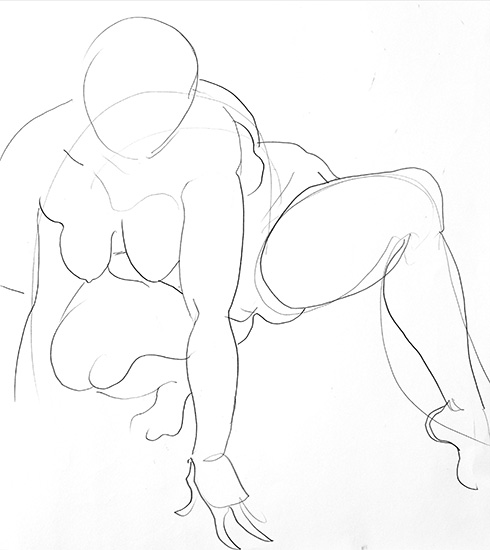
Restaurant Basement, 2013, photo by Fred Hatt

2013/06/11

The Penetrating Glance

Clear Sight, 2007, by Fred Hatt

Clear Sight, 2007, by Fred Hatt

Artists who work from direct observation have a special way of looking at their subjects, a darting glance that picks up impressions the way a janitor’s litter spike snags trash. Nearly every action that builds up the drawing or painting follows from one of those quick looks. You look and make a mark, look again to refine the mark, look again to find the spatial relation of this to that, look for angles, look for curves, look for shades and colors, look to compare, look to correct. You’re constantly comparing your sketch to your model, translating perceptions into marks, trying to see better and capture better all the time, and racing the clock. In a classroom full of artists of mixed levels of experience, you can pick out the ones that know what they’re doing by watching how they look: how efficient and focused is their glance, and how frequently they look between their paper and the model.

My friend and fellow figurative artist Karen Miles made a little film about this (email subscribers will need to follow this link to view the film on YouTube):

These artists are drawing at Minerva Durham’s Spring Studio in New York, a drawing studio that attracts the most dedicated practitioners of drawing from the live model. If you were to observe a drawing session at Spring Studio, you’d probably be struck first by the quiet intensity of the whole group of artists. There is no music, no talking, just the single-minded focus on seeing and drawing.

Crouch, 2009, by Fred Hatt

Crouch, 2009, by Fred Hatt

In quick poses my glances are looking for overall forms, trying to see the figure as an arrangement of curves in space.

On One Knee, 2013, by Fred Hatt

On One Knee, 2013, by Fred Hatt

In the crayon drawing above, I made a first rough pass in magenta, then refined my contours in a bolder blue. There was probably a glance for nearly every separate stroke in the drawing. The sketch below is done with a brush and black watercolor. The individual strokes are easier to distinguish here. I see the curve of the shoulder and that becomes a brush stroke, then glance at the breast and make that curve, then at the belly and make that curve, and so on. Each marking has a certain rhythm and motion that reflect a quick tracing of that particular contour in my perceptual system.

Music, 2013, by Fred Hatt

Music, 2013, by Fred Hatt

Quite apart from the act of drawing, the normal visual process works by assembling impressions picked up by quick movements of the eyes called saccades. The eyes only see clearly over a narrow angle; the overall sharp photographic image we think we see is constructed in the brain as the fragmentary impressions of the saccades are knitted together. (Here’s a more detailed blog post about how that works.)

Complementary Poses, 2012, by Fred Hatt

Complementary Poses, 2012, by Fred Hatt

Constant practice improves the speed by which we receive such perceptions. Each moment of seeing is translated into a movement of the hand. The resulting marks reflect the quality of these movements, and thereby trace a record of the act of vision, a series of impressions made as the artist experiences them.

Passion, 2003, by Fred Hatt

Passion, 2003, by Fred Hatt

Drawing is not simply a copying of contours, but a trail left in permanent marks as the mind examines a scene over a particular period of time. Seen this way, it is clear that drawing captures something that photography does not. A camera, like an NSA surveillance program, indiscriminately vacuums up every detail of light information in its range. A drawing artist is more like a murder-mystery detective, following all the trails, picking up clues, details, impressions, until a coherent picture emerges from the process. Photography is a mechanical scan, while drawing is an active, responsive exploration of a scene. The distinction is between intelligence gathering and intelligent gathering.

Corner, 2008, by Fred Hatt

Corner, 2008, by Fred Hatt

The drawing medium affects how I see. When I am holding a pencil, as in the sketch above, I see the scene in terms of lines. When I use a fan brush, as below, I see broader strokes of light and shadow revealing the form in space.

Folding Forward, 2013, by Fred Hatt

Folding Forward, 2013, by Fred Hatt

I look for curves, and I look for angles. The form is constructed of flowing, rhythmic curves. The spatial arrangement of those curves is defined by angular connections.

Hands on Sacrum, 2013, by Fred Hatt

Hands on Sacrum, 2013, by Fred Hatt

In drawing with a linear medium such as crayon or pencil, light, shade and color must all be translated into line. I imagine that I am drawing, not on flat paper, but directly on the body itself, so that every line follows the three-dimensional shape of the body. Notice the white serpentine line running from armpit to hip in the torso study below. It represents the center of a highlighted area, but its meandering reveals the subtle irregularities imparted to the surface of the skin by underlying layers of bone and muscle, as a raindrop snaking down a windshield shows the hidden undulations in seemingly smooth glass.

Lines of Energy on a Torso, 2006, by Fred Hatt

Lines of Energy on a Torso, 2006, by Fred Hatt

Every glance is a fragment of perceiving. Every glance becomes a stroke in the drawing. It is a living process to record the phenomenon of life.

Imagining, 2008, by Fred Hatt

Imagining, 2008, by Fred Hatt

When there is more time to develop a drawing, additional layers of perceptions build up as the artist looks at the subject again and again. Light, shade, color, reflection, absorption, space, energy, temperature, texture, gravity, vibration, growth and decay – all the phenomena of matter and of life can be found by looking and looking some more.

Legs, 2009, by Fred Hatt

Legs, 2009, by Fred Hatt

Color and light in the real world are complex and slippery. Capturing such things is not a matter of simply duplicating a surface hue and value. Everything is relative, so everything must be seen relative to other things in the scene. As the work develops, the glances are comparative. What areas are redder than their neighboring areas? What areas are greener?

Back Light, 2013, by Fred Hatt

Back Light, 2013, by Fred Hatt

A body exists in space, and the image in the drawing becomes more real as it develops a sense of space. Further glances look at the parts of the body as they intersect with elements of the background.

In a Room, 2013, by Fred Hatt

In a Room, 2013, by Fred Hatt

I keep glancing, looking at light that reflects into shadows and light that penetrates the translucent skin and emerges tinged and diffused, looking at creases that swallow light and bulges that create specular highlights and gradients.

Side Arc, 2013, by Fred Hatt

Side Arc, 2013, by Fred Hatt

To draw is to see seeing, that is, to experience in action all the processes that go into visual perception.

Prone, Crossed Ankles, 2013, by Fred Hatt

Prone, Crossed Ankles, 2013, by Fred Hatt

2013/05/26

Life Drawing at ADaPT


Sample works by visual artists participating in the ADaPT Festival Life Drawing Score, clockwise from left: Michael Alan, Jillian Bernstein, KIMCHIKIM, Masha Braslavsky, Fred Hatt, Susan M. Berkowitz, IURRO.

Sample works by visual artists participating in the ADaPT Festival Life Drawing Score, clockwise from left: Michael Alan, Jillian Bernstein, KIMCHIKIM, Masha Braslavsky, Fred Hatt, Susan M. Berkowitz, IURRO.

ADaPT (A Dance and Physical Theater) Festival, founded in 2011, hosts performances, master classes, and other events in its home base of Santa Barbara, California, and in locations around the world, including one on May 30, 2013 at CPR (Center for Performance Research) in Brooklyn. Festival director Misa Kelly is a dancer and choreographer with her company ArtBark International, and she’s also a life drawing artist and model – please click that last link to see some of Misa’s wonderful drawings.

Adapt Festival Program Orson, May 30 at CPR, features twelve performances by a diverse artists – the link has a full list and descriptions of the pieces. Misa’s a maximalist, surrounding her performance events with installations, projections and opportunities for audience members to express their own creativity. For this program, she asked me to recruit some visual artists and to act as monitor for a special “Life Drawing Score” in conjunction with the performance program.

Art modeling/life drawing is a form of performance, a creative interaction between models (many of whom are also performers in other contexts) and visual artists. This interaction is rarely seen outside of the small community of artists and models. Artwork may be exhibited, but the art audience may be unaware of the collaborative nature of artists’ work with models. Likewise, the dance and theater audience may not know that the performers’ experience modeling for artists is a vital part of their performance practice. Misa decided this special creative relationship deserved a place in a festival of dance and physical theater.

Misa Kelly, photo by Am Wu

Misa Kelly, photo by Am Wu

Here’s what will happen on May 30:

Invited visual artists will be having a private life drawing session in the performance space starting at 6 pm. I’ll be the session monitor. Our models will be Misa Kelly and one other dancer. (There will be no audience for this, until the last 20 minutes of it.)

At 7:15 the audience is invited to the Pre-Show in the lobby. There will be a video installation, sage smudging, and various activities intended to engage audience members to express their own creativity through writing, drawing, and moving.

At 7:35 the audience members will be allowed into the performance space to witness and/or participate in the last 20 minutes of the life drawing session.

At 8:05 there will be a full program of twelve dance and physical theater performances in the performance space. There are descriptions of all of these pieces here: ADaPT Festival Program Orson.

At the intermission (around 9:00) the audience will return to the lobby to see an informal exhibition of work created during the earlier private life drawing session.

Location: CPR (Center for Performance Research), 361 Manhattan Ave, Brooklyn, NY. Tickets $10 in advance or $15 at the door.

Links for participating artists and models:

IURRO

Jillian Bernstein

KIMCHIKIM

Masha Braslavsky

Michael Alan

Misa Kelly

Susan M. Berkowitz

2013/05/06

Drawing (the Bow) and Releasing (the Arrow)

Archer, 2013, by Fred Hatt

Last week I reread a little book I first read around twenty years ago. This post is a look back at how that book influenced me in my art practice. (The illustrations between paragraphs are details of artwork that has appeared previously in Drawing Life, and clicking on the images will link you to the posts containing uncropped versions of the works.)

Sheen (detail), 2010, by Fred Hatt

Sheen (detail), 2010, by Fred Hatt 

Zen in the Art of Archery is German philosophy professor Eugen Herrigel’s account of his experience studying archery in Japan  in the 1920’s under kyudo master Kenzo Awa. Awa taught the traditional Japanese art of the bowman as a spiritual practice aimed at transcendent mastery. Herrigel’s terse and eloquent account, which can easily be read in an afternoon, was one of the first attempts to make Eastern philosophy accessible to the nonspecialist western audience. His choice to approach the subject through practice rather than theory helps to show the roots of mystical ideas in down-to-earth realities. The accessibility of the writing has made this book a popular and often-imitated classic, though Herrigel’s own reputation has justifiably suffered because he later embraced Nazism. It reveals the limitations of Herrigel’s understanding – he never got to the supreme Buddhist virtue: compassion. The book, though, makes no moral or political claims, remaining simply an account of a particular approach to the learning of a craft.

Centered on the Feet (detail), 2012, by Fred Hatt

Centered on the Feet (detail), 2012, by Fred Hatt

In my youth and young adulthood, I read fairly extensively (for an amateur) in the literature of mysticism and esoteric philosophies. The first book that set me on that path was probably the Tao Te Ching (or Daodejing), a 2500-year-old masterpiece of aphoristic poetry that opened my eyes to a way of being in the world utterly unlike the modern Western consensus reality. Zen in the Art of Archery introduced me to the tradition of teaching these perhaps unintuitive ways of perceiving via the practice of various crafts or artforms. The movies have offered a pop version of this teaching method through their portrayal of Kung Fu masters and Jedi Knights, but the arts need not be martial – the Way is also taught through the bamboo flute, the calligraphy brush, through dance, poetry, yoga, flower arranging, sand painting, or the tea ceremony.

Drawing (detail), 2012, by Fred Hatt

Drawing (detail), 2012, by Fred Hatt

By approaching these ideas through a practice in the physical world, we understand them not as doctrines that must be taken on faith, nor as mysterious metaphysical mumbo-jumbo that relies on awe for its power. We experience them in our own bodies, interacting with tangible objects and the immutable laws of physics. The practice of a craft, no less than the practice of meditation or prayer, cultivates the spirit.

Dance of Hephaestos (detail), 2012, photo by Fred Hatt

Dance of Hephaestos (detail), 2012, photo by Fred Hatt

My early encounter with Zen in the Art of Archery convinced me that I could use the practice of art to transform my own perception of the world, to transcend the illusion of the separateness of ourselves and the things of our world. Science or philosophy can reveal the oneness of reality to our reason, but only the practice of an art can make us feel it in our bones. Herrigel’s book gave me important insights into how that might work. It sets forth a particular idea of what constitutes “mastery”, but one that can apply to various disciplines of art, craft, or athleticism.

Cathexis (detail), 2002, body painting and photo by Fred Hatt

Cathexis (detail), 2002, body painting and photo by Fred Hatt

Herrigel practiced archery over about five years under Master Awa. Mostly, the study involves endless repetitions of drawing the bow and releasing the arrow. The practice of shooting goes on for a very long time before a target is introduced, and even then the Master never looks at the target, but always at the student, at the quality of his attention and breath, at the relaxation of the muscles. He allows the student to struggle and fail to the point of despair before introducing any “zen” approaches to the seemingly insoluble problems the student faces, and even when such ideas have been mentioned it often takes a great deal more practice before the student begins to grasp them.

Claudia Quick Poses (detail), 2012, photo by Fred Hatt

Claudia Quick Poses (detail), 2012, photo by Fred Hatt

“You must hold the drawn bowstring,” says the Master, “like a little child holding the proffered finger. It grips it so firmly that one marvels at the strength of the tiny fist. And when it lets the finger go, there is not the slightest jerk. Do you know why? Because a child doesn’t think: I will now let go of the finger in order to grasp this other thing. Completely unself-consciously, without purpose, it turns from one to the other, and we would say that it was playing with the things, were it not equally true that the things are playing with the child.”

Squat (detail), 2009, by Fred Hatt

Squat (detail), 2009, by Fred Hatt

The goal of the practice is to lose all self-consciousness, to let something act through you rather than to act from the ego. The Western approach to the arts is all about the ego – expressing one’s feelings, proving one’s brilliance, selling one’s brand. Westerners encountering these Eastern ideas about transcending the ego or becoming empty of self often interpret them moralistically, as “the ego is bad”. The real idea is more about getting your “self” out of your own way, getting to that state that musicians call being in the groove, that athletes call being in the zone, that Mihaly Czikszentmihalyi described in his famous book Flow: The Psychology of Optimal Experience.

Ovum (detail), 2011, by Fred Hatt

Ovum (detail), 2011, by Fred Hatt

Those who practice improvisational music or dance with others know that when they are in the groove, changes and reactions happen spontaneously and without any reaction time. Suddenly the whole group modulates to a new key, simultaneously. If you were to ask them, not one of them “decided” to modulate, and no one had to notice the modulation and then react to it. Unconsciously, the “group mind” made a shift, and they were all there, together, instantaneously. Reaction or intention always has a delay, but in the groove there is no delay.

Arcs (detail), 2005, body painting and photo by Fred Hatt

Arcs (detail), 2005, body painting and photo by Fred Hatt

The state of being empty of self, as described in Zen in the Art of Archery is just such a state, except that there is no group. How can there be a group mind without a group? It works when you know that the world itself is the ultimate group mind, with which one can sometimes meld, especially while practicing actions one has repeated and repeated and repeated until they can happen without intention. On the path of mastery, one practices not to gain ultimate control, but to go beyond the need to control, to trust the natural flow of things. One practices endlessly not so that one may be fully conscious of every action one must perform, but to be able to perform the actions unconsciously.

Tropic (detail), 2008, by Fred Hatt

Tropic (detail), 2008, by Fred Hatt

This ideal of mastery as unconscious, effortless, and fully detached from the self is never perfectly attainable, but to keep moving it is important to have a goal that remains always just over the horizon.

Firesprite (detail), 2012, by Fred Hatt

Firesprite (detail), 2012, by Fred Hatt

“Your arrows do not carry,” observed the Master, “because they do not reach far enough spiritually. You must act as if the goal were infinitely far off. For master archers it is a fact of common experience that a good archer can shoot further with a medium-strong bow than an unspiritual archer can with the strongest. It does not depend on the bow, but on the presence of mind, on the vitality and awareness with which you shoot. In order to unleash the full force of this spiritual awareness, you must perform the ceremony differently: rather as a good dancer dances. If you do this, your movements will spring from the center, from the seat of right breathing. Instead of reeling off the ceremony like something learned by heart, it will then be as if you were creating it under the inspiration of the moment, so that dance and dancer are one and the same.”

Liquid Topology (Rereflection) (detail), 2007, photo by Fred Hatt

Rereflection (detail), 2007, photo by Fred Hatt

Zen in the Art of Archery introduced me to this ideal of mastery that has guided my practice of life drawing over the years. I am no master, but I travel on the path of mastery, trying more and more to let go and just let it happen, not to draw, but to be drawn.

Concave (detail), 2009, by Fred hatt

Concave (detail), 2009, by Fred hatt

All the images included in this post, with the exception of the first one, are details of works featured previously on Drawing Life. Click on any photo to be taken to the post where the uncropped version of the image can be found.

2013/04/17

Buds and Blossoms

Filed under: Photography: The Seasons — Tags: , , , , , — fred @ 19:15
First Green, 2010, photo by Fred Hatt

First Green, 2010, photo by Fred Hatt

To celebrate the full arrival of Spring that we’re feeling this week here in New York City, let’s look at buds and blossoms, the botanical embodiment of the surging life force, the butts and bosoms of the plant world.

These photos were taken over more than a decade, on dates ranging from March 21 through May 22, and they’re ordered here by day of the year, no matter the year, so the sequence should give a sense of the process of spring as it unfolds over the weeks – how the first wee shoots appear on the gray bare branches, hints of the green eruption to come, and how the pinks and whites and yellows of early spring prepare the way for the bold, brash colors of the late spring.

As usual, I’m sharing way too many pictures – I love them so much! – so I’ll shut up and let them speak for themselves.

First Yellow, 2010, photo by Fred Hatt

First Yellow, 2010, photo by Fred Hatt 

Yellow Willow, 2010, photo by Fred Hatt

Yellow Willow, 2010, photo by Fred Hatt

Blossoms Under a Metal Roof, 2006, photo by Fred Hatt

Night Blooms, 2006, photo by Fred Hatt

Night Blooms, 2006, photo by Fred Hatt

Night Sprout, 2012, photo by Fred Hatt

Night Sprout, 2012, photo by Fred Hatt

Springtime Sunset, 2012, photo by Fred Hatt

Springtime Sunset, 2012, photo by Fred Hatt

Blossom in the Wind, 2011, photo by Fred Hatt

Sakura, 2006, photo by Fred Hatt

Sakura, 2006, photo by Fred Hatt

Renewal, 2006, photo by Fred Hatt

Renewal, 2006, photo by Fred Hatt 

Statue in Spring, 2010, photo by Fred Hatt

Statue in Spring, 2010, photo by Fred Hatt 

Grand Opening, 2005, photo by Fred Hatt

Grand Opening, 2005, photo by Fred Hatt 

Ready, 2005, photo by Fred Hatt

Ready, 2005, photo by Fred Hatt  

Fresh, 2005, photo by Fred Hatt

Fresh, 2005, photo by Fred Hatt 

Spring Sun, 2005, photo by Fred Hatt

Spring Sun, 2005, photo by Fred Hatt 

From the Coccoon, 2007, photo by Fred Hatt

From the Coccoon, 2007, photo by Fred Hatt 

Pink, 2001, photo by Fred Hatt

Pink, 2001, photo by Fred Hatt 

Red, 2001, photo by Fred Hatt

Red, 2001, photo by Fred Hatt 

Spring Fountain, 2003, photo by Fred Hatt

Spring Fountain, 2003, photo by Fred Hatt  

Burgeoning Bough, 2005, photo by Fred Hatt

Burgeoning Bough, 2005, photo by Fred Hatt  

Unfurling, 2006, photo by Fred Hatt

Unfurling, 2006, photo by Fred Hatt  

Tulips and Taxis, 2010, photo by Fred Hatt

Tulips and Taxis, 2010, photo by Fred Hatt 

Pink Tree, 2001, photo by Fred Hatt

Pink Tree, 2001, photo by Fred Hatt  

Pink Arms, 2007, photo by Fred Hatt

Pink Arms, 2007, photo by Fred Hatt  

Restoration, 2005, photo by Fred Hatt

Restoration, 2005, photo by Fred Hatt 

Red Shoots, 2012, photo by Fred Hatt

Red Shoots, 2012, photo by Fred Hatt 

Etched in Green, 2010, photo by Fred Hatt

Etched in Green, 2010, photo by Fred Hatt 

Over the Fence, 2010, photo by Fred Hatt

Over the Fence, 2010, photo by Fred Hatt   

Young Leaves, 2010, photo by Fred Hatt

Young Leaves, 2010, photo by Fred Hatt 

Bees' Target, 2003, photo by Fred Hatt

Bees’ Target, 2003, photo by Fred Hatt 

Burning Bush, 2003, photo by Fred Hatt

Burning Bush, 2003, photo by Fred Hatt   

Flowers in Late Afternoon, 2009, photo by Fred Hatt

Flowers in Late Afternoon, 2009, photo by Fred Hatt 

Sunset Green, 2009, photo by Fred Hatt

Sunset Green, 2009, photo by Fred Hatt  

Spring Green and Brick Red, 2003, photo by Fred Hatt

Spring Green and Brick Red, 2003, photo by Fred Hatt  

Blossom with Droplets, 2001, photo by Fred Hatt

Blossom with Droplets, 2001, photo by Fred Hatt

« Newer PostsOlder Posts »

Powered by WordPress

Theme Tweaker by Unreal