DRAWING LIFE by fred hatt

2012/04/10

Ritual of Enchantment: Human Clay

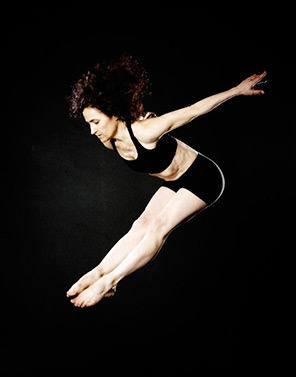
Claire Elizabeth Barratt in Human Clay, a motion sculpture movement installation by Cilla Vee Life Arts, presented by Chashama, 2004, photo by Fred Hatt

One of the most venerable functions of art is to transform the environment, to create a sacred space or a magical moment, to inspire the imagination or to open the mind to contemplate mysteries.  This may be the impulse behind the painted caves of the Ice Age, and it is why places to pray and places to play are often designed as majestic spaces, or filled with images or music, beautiful light, fine materials, costumed performers, ritualized actions, and sensual delights such as incense and candles.

It is a common conceit of modern society to think we’re past all that, or to segregate such things to churches and carnivals and festivals, to dismiss them as kid stuff or god stuff, therefore not real.  The paradigm for the contemporary art gallery is the industrial space with plain white walls and bright track lighting, the better to display work that is formally reductionist, coldly conceptual, or ironic, and of course, always very, very expensive.

Naturally  there’s a counter-movement.  I’ve always been drawn to alternatives to the white box gallery, and have mostly shown work in unusual venues or as part of collaborative multimedia happenings.  One of the organizers of such events is Claire Elizabeth Barratt.  She’s a dancer, performance artist, and installation artist, but I’d say her real art form is to bring diverse artists together in loose collaborative events that aim to create enchanted spaces.  Under the banner of Cilla Vee – Life Arts, she’s produced countless events in a wide variety of environments.

In June, 2004 and again in August, 2005, I created live ink drawings as part of Human Clay, a production Claire calls a “Motion Sculpture Movement Installation”, melding elements of visual art, dance, and live music, all improvised in the moment.  It was what some people call an “ambient performance.”  A variant on “ambient music“, this term generally describes an event with a designated run time but no beginning, middle or end, so the audience can come and go at will, taking a momentary taste or settling into the experience for as long as they wish.

Human Clay was done in one of the 42nd Street storefront window spaces hosted by the NYC arts organization Chashama.  (I’ve written previously about solo drawing performances I did in Chashama’s windows.)  In this space, people could see the performance through the window from the public sidewalk, or they could come in and sit down on the opposite side of the stage, with the city street as backdrop.  I believe the performance went on for four or five hours each time it was done.

In this post I’m presenting pictures of all the drawings I made during the 2004 and 2005 performances of Human Clay, interspersed with photos of the 2004 performance that I took during breaks from drawing.

Hisayasu Takashio, sculptor, in Human Clay, a motion sculpture movement installation by Cilla Vee Life Arts, presented by Chashama, 2004, photo by Fred Hatt

Claire’s description of Human Clay calls it “a constant shifting of landscapes composed of human, rope and twisted tree branch sculptures. The sculptor fervently constructs, molds and forms these elements in a race against time before they give in to gravity and gradually melt towards the ground.”  The sculptor, shown above, is Brooklyn-based Hisayasu Takashio.

Fred Hatt drawing in Human Clay, a motion sculpture movement installation by Cilla Vee Life Arts, presented by Chashama, 2005, photo by Marc Dale

While the sculptor was moving his dancers and objects into ever-shifting arrangements, I was using them as models for brush sketches.  I had hung long strips of white paper throughout the interior of the space, and over the few hours that the performance went on, I recorded my impressions of the fleeting tableaux with my dancing brush.  As each pose was set, it would only hold for a few seconds before heaviness or the impulse to move caused the fragile structure to collapse, so I had to use my quick-drawing skills.  There’s a shot of me drawing, above, and the finished panel below.  As you can see, the drawings are quite large, so I could move the brush freely, and didn’t have to worry about crowding the paper too quickly.

Drama, left panel, ink drawing by Fred Hatt from Human Clay performance, 2005

Normally, a sculptor’s work is long-lasting, but this sculptor was working with living bodies and transient arrangements.  It was up to me to capture what I could, covering the walls with my linear impressions of the slow, shifting sands of the dance.

Image from Human Clay, a motion sculpture movement installation by Cilla Vee Life Arts, presented by Chashama, 2004, photo by Fred Hatt

The ritual of continuous, slow-paced resculpting was sustained by quiet, trancy music.  Marianne Giosa, a soulful trumpeter, multi-instrumentalist and dancer was performing for the 2004 version.

Drama, right panel, ink drawing by Fred Hatt from Human Clay performance, 2005

The elements the sculptor had to work with were ropes: tough but limp, branches: stiff and serpentine, and living human bodies that could combine all those qualities.

Image from Human Clay, a motion sculpture movement installation by Cilla Vee Life Arts, presented by Chashama, 2004, photo by Fred Hatt

The performances maintained the same pace and substance for the full duration – no development, no narrative.  But when I look at the drawings, I can’t help but see dramatic events.  There’s no clear plotline you can read.  It’s like looking at the illustrations to a story book in a language you don’t understand.  The imagination is stimulated to fill in the blanks.

Youth, 2 panels, ink drawing by Fred Hatt from Human Clay performance, 2004

The dancers were smeared with clay, which gave them a crusty patina like cracked plaster.  Some of Claire’s other Motion Sculpture events are wildly colorful.  This one is austere, but with a strong dose of nature’s chaotic textures.

Image from Human Clay, a motion sculpture movement installation by Cilla Vee Life Arts, presented by Chashama, 2004, photo by Fred Hatt

The sticks and ropes added simple but powerful recurring visual motifs to the ever-changing compositions.  Look at the crossed twisty branches above, and in the drawing below, and in the photo below that.

Altar, ink drawing by Fred Hatt from Human Clay performance, 2005

To me the branches evoke the writhing life force, and when the dancers are crossed and suspended and tangled up, my imagination sees sacrifice and struggle.

Image from Human Clay, a motion sculpture movement installation by Cilla Vee Life Arts, presented by Chashama, 2004, photo by Fred Hatt

I had never met the sculptor before these performances, but Claire must have known his wriggly lines and mine would work in harmony!

Fire, ink drawing by Fred Hatt from Human Clay performance, 2005

Always slow, as if in a trance, there is constant change.  A journey through a forest.

Image from Human Clay, a motion sculpture movement installation by Cilla Vee Life Arts, presented by Chashama, 2004, photo by Fred Hatt

Gestures and attitudes, all the expressions of the human body.

Gesticulate, ink drawing by Fred Hatt from Human Clay performance, 2005

Contact, sensuality, struggle.

Image from Human Clay, a motion sculpture movement installation by Cilla Vee Life Arts, presented by Chashama, 2004, photo by Fred Hatt

Spreading out, rising up, sinking down, curling inward.

Relation, 3 panels, ink drawing by Fred Hatt from Human Clay performance, 2004

Pose of a hero, a warrior.

Image from Human Clay, a motion sculpture movement installation by Cilla Vee Life Arts, presented by Chashama, 2004, photo by Fred Hatt

Strife, stress, conflict.

Hitting, ink drawing by Fred Hatt from Human Clay performance, 2005

Pulling apart and holding together.

Image from Human Clay, a motion sculpture movement installation by Cilla Vee Life Arts, presented by Chashama, 2004, photo by Fred Hatt

Stride, strive, strike.

Arise, ink drawing by Fred Hatt from Human Clay performance, 2005

Angle, angel, anger, danger.

Image from Human Clay, a motion sculpture movement installation by Cilla Vee Life Arts, presented by Chashama, 2004, photo by Fred Hatt

Arise, arouse, arrows, errors.

Victory, 3 panels, ink drawing by Fred Hatt from Human Clay performance, 2004

Breathe, bathe, incline, align.

Image from Human Clay, a motion sculpture movement installation by Cilla Vee Life Arts, presented by Chashama, 2004, photo by Fred Hatt

Allay, ally, alloy.

Dance, ink drawing by Fred Hatt from Human Clay performance, 2005

In balance, imbalance.

Image from Human Clay, a motion sculpture movement installation by Cilla Vee Life Arts, presented by Chashama, 2004, photo by Fred Hatt

Every character finds its extreme expression, and its norm.

Individuation, left panel, ink drawing by Fred Hatt from Human Clay performance, 2005

Keep the clay wet, to keep it supple.

Image from Human Clay, a motion sculpture movement installation by Cilla Vee Life Arts, presented by Chashama, 2004, photo by Fred Hatt

Curl, curve, curse, cure.

Individuation, right panel, ink drawing by Fred Hatt from Human Clay performance, 2005

Everything tends to come to rest.

Image from Human Clay, a motion sculpture movement installation by Cilla Vee Life Arts, presented by Chashama, 2004, photo by Fred Hatt

Every body plays many roles as the endless dance goes on.

Fold, 2 panels, ink drawing by Fred Hatt from Human Clay performance, 2004

We are the stuff of stars and of earth.  We shine and we sink down, and new life is always emerging from death.

Image from Human Clay, a motion sculpture movement installation by Cilla Vee Life Arts, presented by Chashama, 2004, photo by Fred Hatto

This ritual has no story, no structure, no destination.  It goes on and on, and when the time comes, it ends.  In the meantime, it evokes every quality of life, but there is no definitive meaning.  This is my experience of this piece, from my viewpoint as a person who looks and loves and draws.  I’m sure Claire, the sculptor, the dancers, and the musicians all have their own rich and very personal experience of the piece.

Encounter, 2 horizontal panels joined, ink drawing by Fred Hatt from Human Clay performance, 2004

I wonder how the audience experienced it.  I imagine there was quite a range, from the passerby who thinks “Look at the weirdos” to the person who gets sucked into the trance and comes in to sit rapt for an hour or more.  As for me, I want to do more things like this.

Audience on the street watching Human Clay, a motion sculpture movement installation by Cilla Vee Life Arts, presented by Chashama, 2004, photo by Fred Hatt

Here are the credits for the performance:  Human Clay with sculptor Hisayasu Takashio, action gesture drawing by Fred Hatt, sound by Marianne Giosa, Judith Berkson and/or Sabine Arnaud, presented at Chashama 42nd Street Storefront, NYC, June 2004 & August 2005.  Dancers in 2004 (those pictured in these photos) were Claire Elizabeth Barratt, Pedro Jimenez, Jill Frere, and Kazu Kulken.  Dancers in 2005 were Claire Elizabeth Barratt, Maria Pirone, Jill Frere, and Judy Canestrelli.

The drawings from 2004 are sumi ink on paper 36″ wide, varying lengths.  The 2005 drawings are sumi ink on paper 48″ wide, also varying lengths.

2010/09/03

Faces of the People

"The Active Mirror", 2002, by Fred Hatt, detail of acetate drawing

New York City is a magnificent environment for people watching.  On the streets, manual laborers mingle with capitalist big shots, celebrities blend in with the masses, and economic refugees share the sidewalks with tourists on spending sprees.  I know of no other city that compares with New York for ethnic and cultural diversity.  If you love humanity for its endless variations, New York is a sumptuous banquet.

"The Active Mirror", 2002, by Fred Hatt, performance photo by April Panzer

Of course, once you leave the street or Subway and step into a culturally specific environment, most of that diversity disappears.  Unfortunately, that is true in the galleries and performance venues of the art world.  The art world in New York is not all white or all American, but it is almost entirely populated by people with a certain kind of education and upbringing, with certain well-defined ways of speaking and acting and dressing.

"The Active Mirror", 2002, by Fred Hatt, performance photo by April Panzer

Those who work in arts administration are united in proclaiming the value of diversity and have been trying for years to reach out to “underserved audiences” and “underrepresented populations”.  Their efforts have been somewhat successful – I think art audiences in New York, especially for large, well-publicized events, are clearly more diverse now than when I moved here two decades ago.  Still, it doesn’t begin to compare with the diversity on the streets.  Art galleries in New York are all free to enter, but the vast majority of people never do.  Unfortunately a lot of art is pretentious and unfriendly to the uninitiated.  This attracts an audience of initiates, whose aura of exclusivity tends to deter those who do not see themselves as art world insiders.

"The Active Mirror",2003, by Fred Hatt, detail of acetate drawing

A few years ago I took advantage of an opportunity to use my art to connect with people on the street.  Chashama is an arts organization that has special access to the asset that is most problematic in the dense and expensive city – space.  Chashama’s founder and artistic director, Anita Durst, is a member of a legendary real estate dynasty family.  The Durst Organization develops skyscrapers in Manhattan.  Properties that are condemned or transitional are made available for the arts through Chashama.  I’ve been involved with Chashama events since the mid-1990′s.  They have a great track record of supporting all kinds of artists, including some that most of the institutions would consider too underground or outsider or offbeat to present.

"The Active Mirror", 2002, by Fred Hatt, performance photo by April Panzer

During the early 2000′s, Chashama had a whole block of storefronts on 42nd Street between Sixth Avenue and Broadway, while the Durst Organization was constructing the Conde Nast Building at the corner of Broadway and 42nd, the southern end of Times Square and the Theater District.  They hosted a huge festival of theater and dance, performance art, visual art and installations called “Windows on 42nd Street“.  In April, 2002, and again in July, 2003, I presented a drawing performance called “The Active Mirror.”

"The Active Mirror", 2002, by Fred Hatt, performance photo by April Panzer

A sign on the window read: “A reflection is the view of a virtual eye behind the glass.  Look at your reflection in a storefront window, and you see yourself and your surroundings, superimposed over the merchandise on display.  But in this window, on this day, the view you see in the window is that of another subjective eye, an artist who sketches what he sees through the window, on the window.  Stop to watch, and your portrait may appear there on the window.”

"The Active Mirror", 2003, by Fred Hatt, detail of acetate drawing

I lined the inside of the window space with white fabric and the inside of the plate glass with clear acetate.  I hung some of my portraits in the window space, to prove, I suppose, that I was a qualified portrait artist.  I stood at the window with my black Sharpie and sketched the urban landscape until I could attract passersby to stop for me.  If anyone paused to watch, I quickly began sketching a likeness, starting with a recognizable detail of attire or hairstyle so the subject would know that I was drawing him or her.  I had to work quickly, as I couldn’t expect anyone to have the patience to give me a prolonged pose.  Other passersby would stop to watch the action, and I would quickly move on to the next subject, since if my audience would disperse I would face the difficult challenge of gathering a new cluster.

"The Active Mirror", 2003, by Fred Hatt, detail of acetate drawing

Visual art is usually considered an indirect form of communication.  You make a painting or whatever, and later, people look at it and try to imagine what you were thinking or feeling in the act of creating it.  For a long time I’ve had an interest in the potential of visual art as a more direct way of relating to another person.  This interest has been explored through a highly collaborative way of working with models, through the idea of art as a ritual or experience (such as body painting), and through treating the act of drawing or painting as a dance or performance, for an audience.

"The Active Mirror", 2002, by Fred Hatt, performance photo by April Panzer

In “The Active Mirror”, my offer to strangers was to share with them my way of seeing them.   I could not speak to my subjects, nor they to me, through the thick plate glass.  My sharpie sketches were my only way of relating to people.  Around the corner in Times Square, there are portrait and caricature artists who make a living sketching the tourists.  My sketches were not for sale, just for public display, and I think many of the people who stopped for me were not tourists, but New Yorkers who would never think of sitting for a street caricaturist.

"The Active Mirror", 2002, by Fred Hatt, detail of acetate drawing

Everyone is comfortable looking at something in a store window, even people who would never enter an art gallery or performance space, so by the end of five hours of sketching, the windows were covered with images reflecting the wondrous diversity of the New York street.

"The Active Mirror", 2002, view from inside the window, drawings and photo by Fred Hatt

Here are some more details:

"The Active Mirror", 2003, by Fred Hatt, detail of acetate drawing

"The Active Mirror", 2002, by Fred Hatt, detail of acetate drawing

"The Active Mirror", 2003, by Fred Hatt, detail of acetate drawing

"The Active Mirror", 2003, by Fred Hatt, detail of acetate drawing

"The Active Mirror", 2002, by Fred Hatt, detail of acetate drawing

"The Active Mirror", 2003, by Fred Hatt, detail of acetate drawing

"The Active Mirror", 2002, by Fred Hatt, detail of acetate drawing

"The Active Mirror", 2002, by Fred Hatt, detail of acetate drawing

"The Active Mirror", 2003, by Fred Hatt, detail of acetate drawing

"The Active Mirror", 2002, by Fred Hatt, view from inside window, drawings and photo by Fred Hatt

2010/03/23

Drawing as Theater / Presence as Provocation: Kentridge and Abramovic at MoMA

Rest Energy, photo of a 1980 performance by Marina Abramovic and Ulay, photo from Galleria Lia Rumma

The Museum of Modern Art in New York currently hosts retrospectives of two idiosyncratic and uncompromising living artists, Yugoslavian born Marina Abramovic and South African William Kentridge.  The two artists could hardly be more different from each other, but each has followed the path of art as something deeply personal and necessary.

Marina Abramovic emerged as a performance artist in the 1970′s.  Using her own body as her medium, she explored the power of living presence in ritual acts of vulnerability and endurance.  Her earliest works were so raw and risky they still shock – for example, in Rhythm 2 (1974), she took drugs that caused seizures, convulsions and catatonia.  But then in the 70′s everyone was experimenting with drugs – she just did it in front of an audience.

In 1976 she began a twelve year collaboration with Ulay (Uwe Laysiepen).  The work they did together achieved a kind of spiritual and aesthetic clarity that has not been surpassed, even as this kind of work has entered the mainstream with David Blaine‘s well-publicized acts of endurance.  In “Rest Energy”, pictured at the top of the post, Abramovic and Ulay lean apart, their weight suspended by the tension of a bowstring with an arrow aimed at Abramovic’s heart.

Abramovic and Ulay traveled continuously, living in an old Citroen van (the van is in the MoMA exhibit), fully devoting their lives to their artistic experiment.  A statement they wrote at the time (1975) reads:

ART VITAL

no fixed living-place
permanent movement
direct contact
local relation
self-selection
passing limitations
taking risks
mobile energy
no rehearsals
no predicted end
no repetition
extended vulnerability
exposure to chance
primary reactions

Abramovic and Ulay parted ways in 1988.  Much of Abramovic’s solo work from the 90′s looks to me more strident and more self-conscious about making “statements”, but in her most recent work she seems to be rediscovering the power of simplicity.

The Abramovic retrospective at MoMA includes documentation of a great many of these performances that tested the limits of the mind and body and the relationship between artist and audience.  It also includes living “reperformers”, re-enacting several of the most well-known actions.  The one that has been most widely discussed is Imponderabilia, originally performed by Abramovic and Ulay in 1977.  A naked male and female stand impassively facing each other in a narrow doorway, through which museumgoers may pass only by squeezing sideways between the pair.

Abramovic has long argued that performance art must be kept alive by reperformance, and in her 2005 show at the Guggenheim Museum she herself reperformed a number of seminal performance works originally done decades ago by such artists as Joseph Beuys and Valie Export.  It is undeniable that the MoMA show is more interesting with live bodies interspersed among the old documentation, but the change of context has surely altered the effect of the pieces.  It is not just that what were once radical experiments are now enshrined in the most institutional of museums.  The original pieces were radically minimalist – highly clarified simple happenings in isolation, usually presented in blank gallery spaces.  The MoMA exhibit is like a crowded menagerie of acts and images, with a steady flow of tourists trying to see it all before their feet give out or the kids start crying or they have to meet someone for dinner.

The title of the Abramovic show at MoMA is The Artist Is Present, and it is with her own simple presence that she makes the strongest statement and the deepest impression in this show.  In the great atrium of the Museum, throughout the public hours while her exhibit is open, the 63-year-old artist sits silently at a table, while museumgoers are invited to sit directly across from her.  She sits all day, and will do so for 77 days.  This is about as radically minimal as performance can get.  She is not doing anything sensational, really not doing anything at all.  But if you’ve tried to sit still for even an hour you know it becomes incredibly grueling.  You can often see the pain in her face as she holds steady eye contact with an endless stream of museum visitors, some of whom sit for moments, and some for hours.  It is an act of extreme endurance, but also, in a way, an act of extreme generosity, giving herself to her audience in direct human presence.  Observe for a while and you’ll see suffering, defiance, confrontation, resignation, engagement, boredom and bliss – the full range of the human condition living and breathing there before us.  Amazingly, her simple presence fills up the gigantic atrium space more than any of the monumental pieces of art I’ve seen there over the years.

On the opening day, her former collaborator, Ulay, showed up at the table for an unexpected tearful reunion:

Ulay and Marina Abramovic, March, 2010, photo by Scott Rudd for MoMA

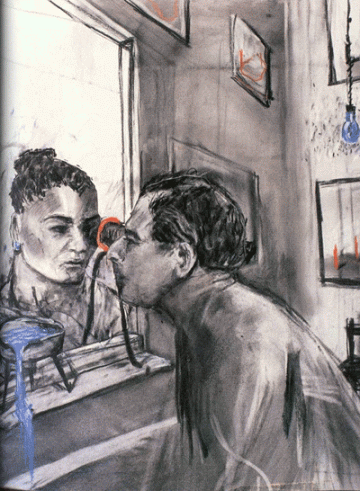
Just off the Atrium is the entrance to another immersive exhibit, William Kentridge:  Five Themes.  Timed to coincide with Kentridge’s multimedia staging of Shostakovich’s opera The Nose (based on Nikolai Gogol’s short story) at the Metropolitan Opera, this retrospective shows Kentridge’s drawings, prints, animated films, theatrical designs, optical experiments and even animatronic puppets as a diverse but highly unified body of work that spans media and obliterates the traditional line dividing graphic art and theatrical storytelling.

Kentridge became widely known in the 1990′s for his 9 Drawings for Projection (1989-2003), a series of richly evocative short animated films, made by drawing, erasing and redrawing large charcoal sketches on paper.  Originally shown one at a time in galleries in conjuction with exhibits of the final-stage charcoal drawings, the series of films hangs loosely together as a single ongoing story.  They tell of an industrialist, Soho Eckstein, his wife, and her lover, the bohemian Felix Teitlebaum, who is always depicted naked.  Eckstein and Teitlebaum are opposites in a way, but both recognizably resemble Kentridge.  The story in 9 Drawings plays out across the backdrop of the upheavals of South Africa in the late apartheid and early post-apartheid eras, but the films aren’t straightforwardly political.  Instead they’re personal and poetic.  The erasures and redrawing of the filmmaking technique, the transformations of the elemental and mechanical imagery, the ebb and flow of the lives of the characters, and the shifting sands of cultural change are all of a piece, an era of life experience distilled into a cinematic dream.  I get the impression that the transformations of the drawings are not preconceived, but exploratory.

Drawing from “Felix in Exile”, 1994, one of “9 Drawings for Projection” by William Kentridge

The museum show is arranged not chronologically or by media, but thematically.  The 9 Drawings and other films are projected at monumental size, with the real drawings, also quite large, nearby, allowing one to experience the images in both their forms, as mutable projections and as the tactile reality of smudgy charcoal on heavily worked paper.

Kentridge is an obsessive drawer and mark-maker.  One room in the MoMA show surrounds us with multiple projections showing him drawing, tearing paper, pouring ink, etc., often in reverse.  Other rooms are filled with projections, drawings and objects based around designs for his recent operatic productions, Mozart’s Magic Flute and Shostakovich’s The Nose.  There is almost too much to take in, a barrage of images and ideas, nearly all in bold black and white, with a rough, handmade texture.  Throughout the exhibit there are many recurring images, including water and bathing, mechanically walking figures, birds and  rhinoceroses, the industrialized landscape, Alfred Jarry’s corrupt king Ubu, and especially Kentridge’s own heavyset self-image.

Kentridge’s work is not colorful, and while it is bold, it is not simplistic.  It is gray and ambiguous and conflicted.   It draws upon the angular dynamism of early-20th-century avant-garde design, but the boldness is more than anything else the magnified theatrical gesture of the human form.  This is the closest contemporary work I know to the great etchings of Goya, the Caprichos and the Disasters of War.  For Kentridge the act of drawing is theatrical, improvisational and demonstrative, and theater is a graphic art where shadows and lines convey ideas and feelings.

Drawing for II Sole 24 Ore (World Walking), 2007, by William Kentridge; Charcoal, gouache, pastel, and colored pencil on paper, Marion Goodman Gallery

I’ll close with a quote from the Phaidon Monograph, William Kentridge, by Carolyn Christov-Bakargiev et al, that reveals something about his open-ended creative process:

“Drawing for me is about fluidity.  There may be a vague sense of what you’re going to draw but things occur during the process that may modify, consolidate or shed doubts on what you know.  So drawing is a testing of ideas; a slow-motion version of thought.  It does not arrive instantly like a photograph. The uncertain and imprecise way of constructing a drawing is sometimes a model of how to construct meaning.  What ends in clarity does not begin that way.”

Marina Abramovic:  The Artist Is Present, organized by Klaus Biesenbach, Chief Curator at Large, The Museum of Modern Art, and Director, P.S.1 Contemporary Art Center, is on view through May 31, 2010, at the Museum of Modern Art, New York.

William Kentridge:  Five Themes, originally organized for the San Francisco Museum of Modern Art and the Norton Museum of Art by Mark Rosenthal, is on view through May 17, 2010 at the Museum of Modern Art, New York.

Images in this post link back to the sites where I found them.

2009/03/19

Confabulator

Filed under: Others' work,Photography,Reviews — Tags: , , , — fred @ 00:42

Confabulator, 2009, installation by Joyce Yamada + Joanne Ungar, photo by Fred Hatt

Confabulator, 2009, installation by Joyce Yamada and Joanne Ungar, photo by Fred Hatt

I support my art and keep it free by doing a lot of technical and visual work for others – video production, photography, projection and audiovisual work.  I know a lot of people in the creative fields, so I’ve made a specialty of working with visual and performing artists.  Often it’s fascinating work, and it gives me a window into other peoples’ creative processes.  In photographing artwork, I’m often asked to shoot artwork that’s especially challenging to capture – paintings in silver on white, or elaborate installations inside curtained boxes, or paintings in molten glass on shiny metal.

The piece shown above, Confabulator, is a collaboration between Brooklyn-based artists Joyce Yamada and Joanne Ungar.  Check out their sites by clicking on their names to get a sense of them as individual artists.  This installation is on view now through April 19 at the PS122 Gallery, the visual art space attached to the famed incubator of performance art in New York.  It’s in the “Hallway Space”, just outside the main gallery space, so I guess that makes this real outsider art.

As a photographer of artwork, this one presented an agglomeration of challenges.  It’s in a niche about a foot wide, maybe 18 inches deep and seven feet tall.  That niche is on the side wall of a narrow passageway, so it’s impossible to get more than a few feet away from it.  It has mixed lighting sources, with blacklights, amber bulbs, and a video projector.  I shot lots of details, but for the overall shot the one you see above was made by setting the tripod right up close to the opening of the niche and shooting a series of shots, tilting from top to bottom, and later combining them digitally into a “vertical panorama”.

The stimulating ideas behind Confabulator have to do with neuroscience and mythology.  The archetype of the three-tiered world, this earth plus heaven and hell, or the underworld and upperworld described by shamans, is related to the levels of the brain that filter incoming sensory data and make sense of it by turning it into stories, or “confabulating”.  Here the underworld is seen as an intestinal tangle, the heavenly world is portrayed by a looping video image of blissful fluidity, and the terrestrial realm is depicted by a block of resin slowly melting into an oozy pool, attended by industrious dung beetles.

If you’re in the East Village of New York, stop in to meditate on this piece.  The space is open from noon to 6 pm Thursday thru Sunday.  Be sure to pick up the artists’ written statement about the work.  Something that’s not captured in the photo is the way the ever-changing video images bathe the middle level of the piece in cycles of colored light, a lovely depiction of the influence of the heavenly realm on the earthly one.

NOTE:  Updated and corrected information added March 25:  The PS122 gallery is closed for installation of the next show in the main gallery March 26 through 28.  There’s an opening for that show on March 28, 5-7.  Confabulator will remain in the Hallway Space through that time and Joyce and Joanne will be there at the opening on the 28th.  Regular gallery hours resume Sunday, March 29 and Confabulator will be on view through April 19 (not through April 26 as earlier reported here).

Powered by WordPress

Better Tag Cloud
%d bloggers like this: