DRAWING LIFE by fred hatt

2013/08/24

In the Presence of the Watcher

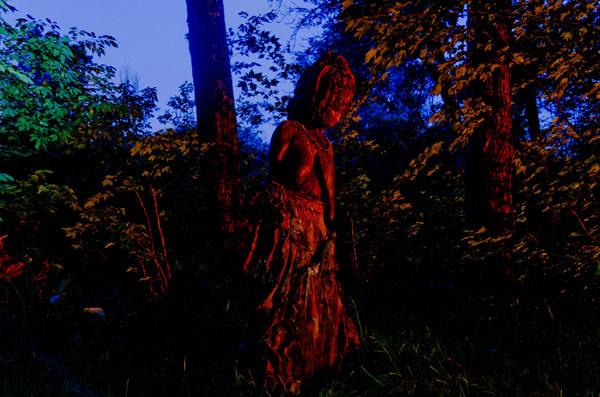
The Watcher at Night, 2013, photo by Fred Hatt

The Watcher at Night, 2013, photo by Fred Hatt

The Watcher is a life-size figurative sculpture that overlooks a quiet path in the woods at the Brushwood Folklore Center in Sherman, New York. It’s been there for six or seven years, but coming upon it, you’d think it had been there for centuries. It seems to grow out of the land, manifesting the spirit of the place.
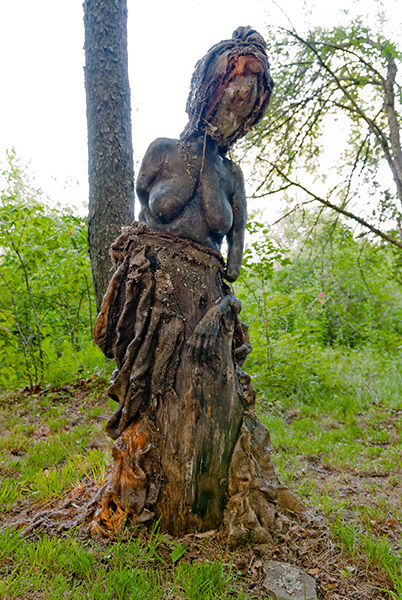
The Watcher, front view, 2009, by Fred Hatt

The Watcher, front view, 2009, by Fred Hatt

If this is a wood nymph, it is no pale, delicate fairy. The Watcher is rough and gnarled like an old tree, an embodiment of life force that survives the lashings of seasons by twisting and toughening and enduring.
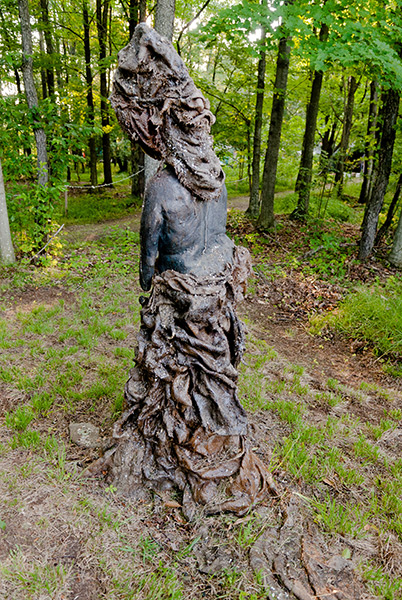
The Watcher (back view), 2009, photo by Fred Hatt

The Watcher, back view, 2009, photo by Fred Hatt

Bellavia is the artist who created The Watcher. For many years she has been a strong presence in the creative community of the festivals at Brushwood. A few years ago she moved from Western New York to New Orleans, but still returns to Brushwood when she can. (Click on her name above to see other artwork by Bellavia.)

Bellavia, 2004, photo and face paint by Fred Hatt

The Watcher is made is made of bronze, pine, burlap, organic matter, fiberglass resin, bone, and cast glass. Parts of it are cast from a live model, Liag, who is a friend of the artist. Liag told me “I have felt an attachment to The Watcher since I first saw Bella’s sketches in 2004.  The process of me becoming part of the sculpture, my torso and arms and hand, was profound.  I feel she is now part of me.  I sense her presence within and around me all the time.  She is alive.”
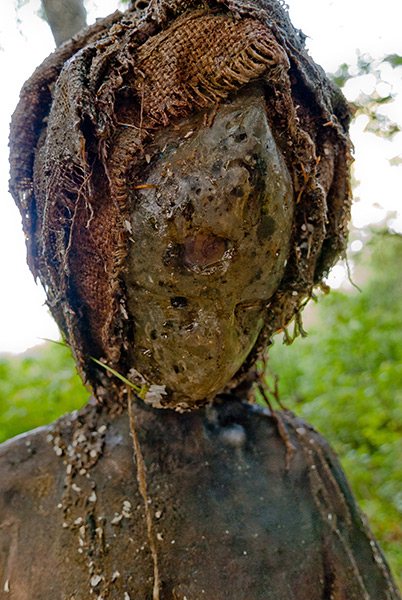
Head of the Watcher, 2009, photo by Fred Hatt

Head of the Watcher, 2009, photo by Fred Hatt

I asked Bellavia if she designed the work in advance or if it emerged from experimentation. She replied, “I had a rough vision of the piece when I started. It turned out a little like the sketches but so very different at the same time. The piece itself takes over at some point and brings itself to the front and I just become a conduit for it.”
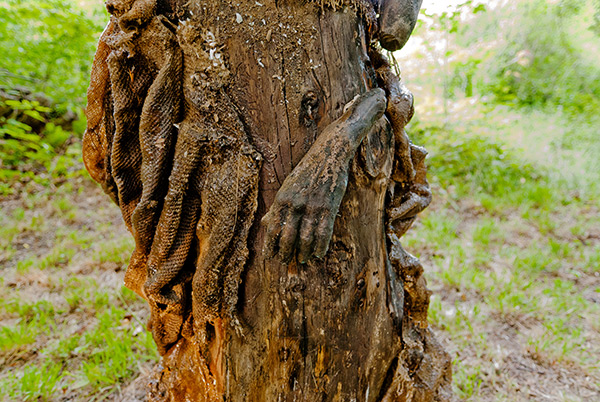
Hand of the Watcher, 2009, photo by Fred Hatt

Hand of the Watcher, 2009, photo by Fred Hatt

She said the Watcher “was not made with brushwood in mind. I don’t work with places in mind for the work. I simply could not move her down south with me and I felt like I really wanted to give something back to the community at Brushwood.”

The Watcher, upper body, 2009, photo by Fred Hatt

The Watcher, upper body, 2009, photo by Fred Hatt

For Bellavia, the work is about female identity and body image. In an artist’s statement, she says:

As a human who happens to be a woman I am all too aware that public opinion and disapproval is something that we are still essentially bound by. Our societal teachings about the many aspects of “self” are generally distorted and inaccurate. I am interested in presenting the viewer with a look into those distortions and offering glimpses of the possibilities in transforming that fear of disapproval or censure. My personal modes of perception towards the meaning and substance of life in all its complexities cause my work to be up close, personal and visceral. My artwork is exploration as a process of defining/redefining an image of the self and body. Oftentimes beautiful, dangerous and disturbing, a palpable presence arises from my work. There is always a hint of darkness underneath the beauty, completing the circle of light and dark. My work is daring, and shows courage, grace and beauty in being willing to challenge normal assumptions about sexuality and boundaries. I am very upfront about the assertion of ones sexuality and exploration of such. I am often my own subject, facing myself, my past and my demons. I endeavor to show the transformation process that starts in the soul towards a new definition of the self. This artistic process brings a freedom from the weight of prejudices, traditions, and custom and the healing from that lies not in distancing myself from it, not in attempting to heal it, but in embracing the experience as part of being alive.
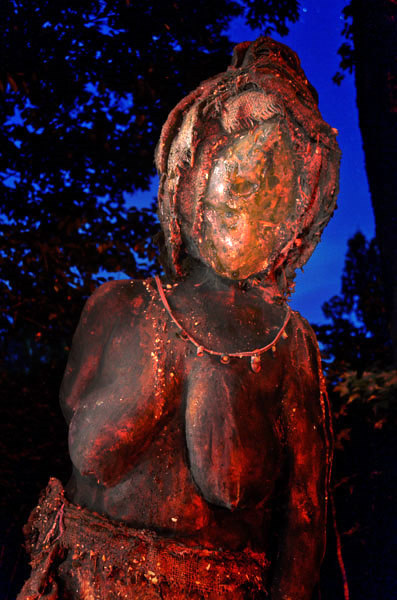
Eye of the Watcher, 2013, photo by Fred Hatt

Eye of the Watcher, 2013, light painting photo by Fred Hatt

Many people are drawn to spend time with The Watcher, and a sort of altar has grown around the base of the sculpture. I feel a power in the work, and I’ve occasionally tried to capture some of its spirit in photographs. This summer, I used The Watcher as a model for light painting. Light painting photographs are taken in the dark with a long exposure time, during which I move around the subject with flashlights or other hand-held lights, applying strokes of light to bring out aspects of the form or to suggest energy within.
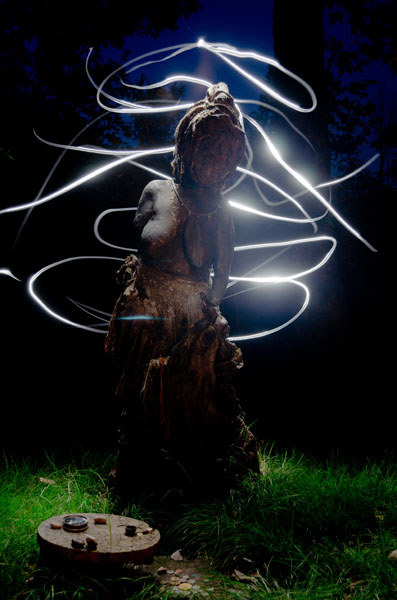
The Watcher with Wings, 2013, photo by Fred Hatt

The Watcher with Wings, 2013, light painting photo by Fred Hatt

The video below is made up of some of my light painting images of The Watcher, dissolving one into another so that light seems to move around and animate her earthy form. This is my personal exploration of the palpable presence of The Watcher.

The Watcher from Fred Hatt on Vimeo.

All of the photographs in this video are straight shots, with no digital painting or manipulation.

2013/08/17

Stereo Botanicals

Filed under: Photography: Stereoscopic — Tags: , , , , — fred @ 21:43
Looking Down, 2013, photo by Fred Hatt

Looking Down, 2013, photo by Fred Hatt

If you’re ready for a new life drawing post, click over to Museworthy, where the great art model and my blogging mentor Claudia has posted about our recent session working together in my studio, with photos and drawings!

I like to use stereoscopic photography to study the shapes of things in space – especially complex forms like those of trees and flowers, which can only really be understood in three dimensions. Flat photographs of plants are like pressed flowers – still lovely, but a certain violence has been done.

Stereo photographs reproduce human spatial perception. To see depth in the images in this post, you’ll need a pair of common red/cyan 3D glasses. If you don’t have a pair lying around, you can get one for free here. Ask for red/cyan anaglyph 3D glasses. If you look at these photos without the glasses, you’re missing a lot!

The originals of these photos were in color, but I don’t like any of the methods for presenting stereo photos in color on the web, so I’ve converted them to monochrome for this post. Most pictures of plants and flowers dazzle us with colorfulness, but here we’ll get rid of that distracting factor the better to study forms in space.

Lyman Conservatory at the Botanic Garden of Smith College, 2013, photo by Fred Hatt

Lyman Conservatory at the Botanic Garden of Smith College, 2013, photo by Fred Hatt

My brother Frank lives in Northampton, Massachusetts, a lovely and lively town that is the home of Smith College. The campus has wonderful landscaping and botanical gardens, including this magnificent victorian-era Lyman Conservatory, which houses over 2500 species of plants from around the world. It’s one of my favorite places to visit when I’m in town to hang with Frank, and all of the pictures in this post were taken on the Smith College campus last June.

Conservatory Door, 2013, photo by Fred Hatt

Conservatory Door, 2013, photo by Fred Hatt

This tree forms a kind of leafy dome under which one may take shelter from sun or rain.

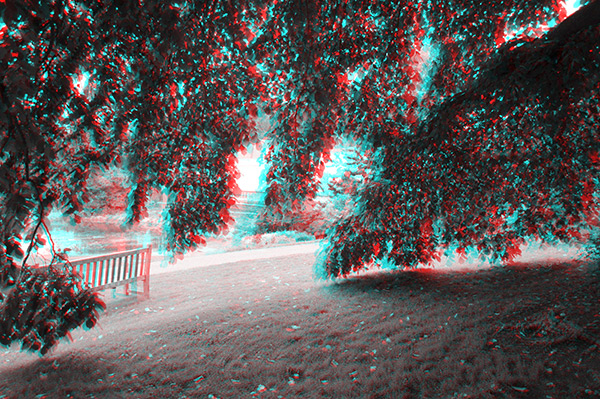
View from Under the Weeping Beech, 2013, photo by Fred Hatt

View from Under the Weeping Beech, 2013, photo by Fred Hatt

The campus has a good-sized lake surrounded by woods where students can wander the paths and ponder on questions and wonder at the glorious diversity of earthly lifeforms.

Paradise Pond, Smith College, 2013, photo by Fred Hatt

Paradise Pond, Smith College, 2013, photo by Fred Hatt

The shapes of the land itself are organic forms, just as much as are the living things that adorn the hillocks and hollows of that sod.

Grassy Slope, 2013, photo by Fred Hatt

Grassy Slope, 2013, photo by Fred Hatt

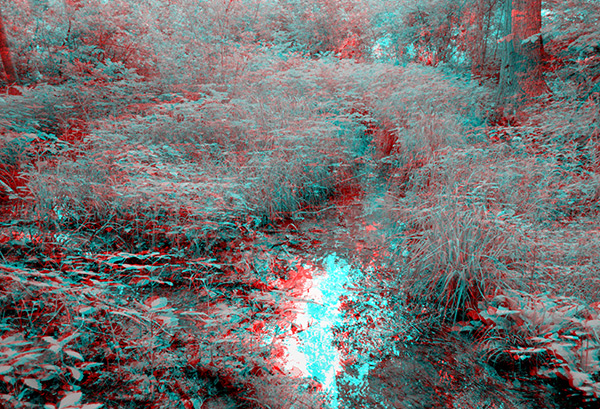
Whatever dies falls down and is recycled in water and earth and its vitality bursts up out of the muck.

Marsh, 2013, photo by Fred Hatt

Marsh, 2013, photo by Fred Hatt

Every kind of plant has its own characteristic kinds of leaves and patterns of growth, and there seems to be no limit to the variations that can thrive given the right conditions.

Japanese Maple, 2013, photo by Fred Hatt

Japanese Maple, 2013, photo by Fred Hatt

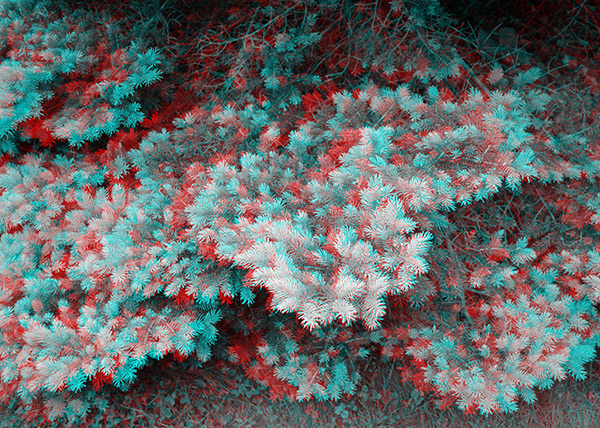
Some are soft and some are spiky, some yielding and some aggressive. The different forms are like different personalities.

Fir Tree, 2013, photo by Fred Hatt

Fir Tree, 2013, photo by Fred Hatt

Plant forms reach out into space to gather energy from light and air and matter from earth and water. Every plant is an alchemical flask of transformation.

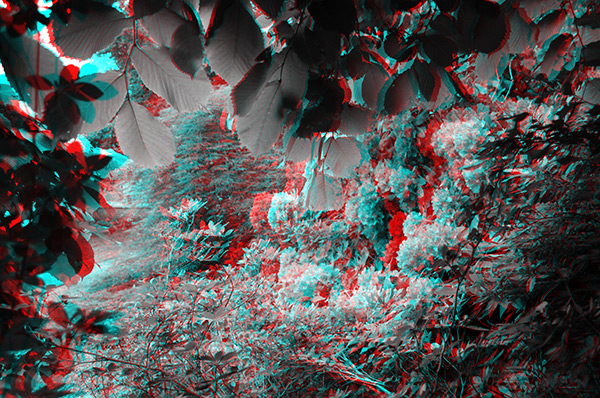
Negative Spaces, 2013, by Fred Hatt

Negative Spaces, 2013, by Fred Hatt

Contemplating nature requires all the senses: smell and taste, touch and sight and hearing, intuition and reason.

Mixed Leaf Types, 2013, photo by Fred Hatt

Mixed Leaf Types, 2013, photo by Fred Hatt

Nature is reaching out to us, asking us to reconnect, to remember that we are beings of Earth. Alas, we have isolated ourselves in pods and given all our attention to things that flash and sparkle and pretend to respond to us.

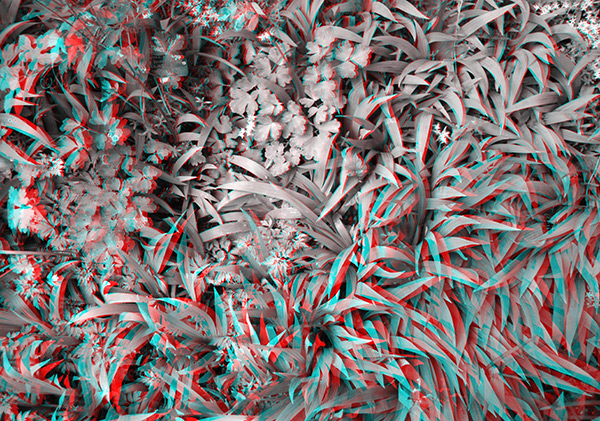
Lanceolate Clusters, 2013, photo by Fred Hatt

Lanceolate Clusters, 2013, photo by Fred Hatt

If soft nature cannot touch us, sharp and prickly nature will some day come to bear.

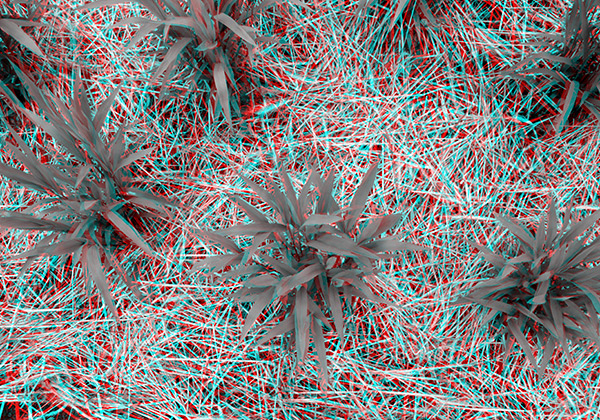
Agave, 2013, photo by Fred Hatt

Agave, 2013, photo by Fred Hatt

The world seems to be a perfect laboratory for generating changing conditions, to which life must respond by adapting into astonishing and wondrous forms.

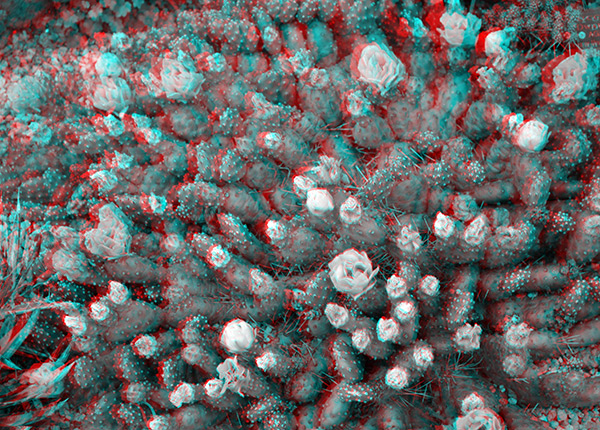
Cacti, 2013, by Fred Hatt

Cacti, 2013, by Fred Hatt

While we dispute over abstractions, the ever-flowing life force manifests all around us in a billion ways, always aborning, dying, and being born again.

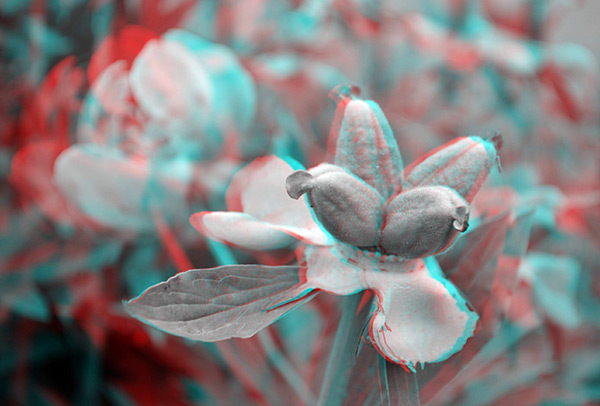
Four-Way Bud, 2013, photo by Fred Hatt

Four-Way Bud, 2013, photo by Fred Hatt

We dream of being visited by alien spacemen that talk and use technology like we do, imagining they will bring us wisdom, while the real deep wisdom shows itself to us in the ever-changing costumes of thriving things and feeling creatures.

Purple Iris, 2013, photo by Fred Hatt

Purple Iris, 2013, photo by Fred Hatt

Stop for a moment, stop using and consuming everything, stop entertaining yourself, stop competing with everyone. Look, and touch, and smell. You don’t need to meditate on a mountaintop. The magic is right here.

White Irises, 2013, photo by Fred Hatt

All of these photos were taken with a regular digital SLR camera, by taking one shot as a left-eye view and then shifting a few inches to take a second shot as a right-eye view. Alignment and conversion into anaglyphs was done with the great free software StereoPhoto Maker, which can also convert to many other formats of stereo photography.

Previous posts of stereo photography are here and here.

I love looking at plants but I’m no expert. If you notice that I’ve mislabeled anything here, please let me know in comments.


Powered by WordPress

Theme Tweaker by Unreal