DRAWING LIFE by fred hatt

2016/07/15

Movement, Rhythm, Feeling: “Shadows of Hiroshima” and Other Dance Films

Filed under: Video: Dance and Performance — fred @ 10:00
still 3

Still from “Shadows of Hiroshima” by Yuko Takebe


Please join us for a screening of dance films

Friday, January 29, 2016

The entire program will screen at 5:00 pm and again at 6:30 pm

1 East 53rd Street, Ground Floor Theater

$3 donation

Reservations: janetaisawa@gmail.com – Seating is limited.

Films by Yuko Takebe, Fred Hatt, Lili White, Milan Misko, Michele Cappello, Aya Shibahara, and Julie Ludwick


Still from "#55 - CITADEL", film by Lili White

Still from “#55 – CITADEL” by Lili White

Lili White’s video layers images inspired by I Ching hexagram #55, the elements of thunder over lightning/fire, portraying expanded intelligence and energetic movement.


Cappello_still4

Still from untitled 8mm film by Michele Cappello

Michele Cappello creates hand-processed analog films. Featured dancers: Celeste Hastings and Djuna Passman.


Emergence 1080P24.00_03_58_16.Still003s

Still from “Emergence” by Fred Hatt with Corinna Brown and Craig Colorusso

A primal drama of woman and man plays out beneath the surface at a loft party, in a butoh improvisation created by Corinna Brown and Craig Colorusso, in which Fred Hatt’s camera and light dance along with the performers.


Still from "Out From Under", film by Julie Ludwick

Still from “Out From Under” conceived by Julie Ludwick

An excerpt from Julie Ludwick’s evening-length multi media aerial dance production “Passages”, exploring our relationship with death, featuring dancer Janet Aisawa.


Still from "Seeds" by Aya Shibahara

Still from “Seeds” by Aya Shibahara

In “Seeds” choreographer Aya Shibahara’s sensual, liquid movement thrives in an environment of altered views and perspectives.


Still from "Transportation" by Milan Misko

Still from “Transportation” by Milan Misko

A man is swept away on an unpredictable journey through New York City and encounters himself in a battle for control.


Still from "Oonossa" by Fred Hatt and Kelly Buwalda

Still from “Oonossa” by Fred Hatt and Kelly Buwalda

A dance in dunes, among the beach heather, in wind and mist. Time moves forward and back, a dry branch partners the grounded movement.


still 4

Still from “Shadows of Hiroshima” by Yuko Takebe

Our featured presentation, “Shadows of Hiroshima”, by Yuko Takebe, conceived by Janet Aisawa, is a four-part piece about the wandering soul of a woman killed in the atomic bombing of Hiroshima, filmed on location in Hiroshima, Japan.

2015/02/06

COLOR exhibition opens Feb 13, 2015

Filed under: My Events: Exhibitions — Tags: , , , , , , , — fred @ 07:32

COLOR

A collection of Fred Hatt’s colorful figurative drawings is included in COLOR, opening Friday, February 13, at Figureworks Gallery in Williamsburg, Brooklyn. Here is Figureworks’ show description:

COLOR is part II of WITHOUT/COLOR, a two-part exhibition featuring six artists. Three artists, Meridith McNeal, Alexander Ney, and Joanne Scott, have executed work void of color. Three artists, Howard Eisman, Fred Hatt, and Arlene Morris, have used a palette rich in color for their work.

Part I [still on view through this weekend]
Meridith McNeal, Alexander Ney, Joanne Scott
January 9 – February 8, 2015
Reception: Friday evening, January 9, 6-9PM

Part II [opens next Friday]
Howard Eisman, Fred Hatt, Arlene Morris
February 13 – March 15, 2015
Reception: Friday evening, February 13, 6-9PM

The initial concept for these consecutive exhibitions was to explore the impact of color, and lack thereof, in an environment. Figureworks, an intimate gallery, quickly embraces whatever is placed within it and though there have been nearly 100 exhibits in this space, what has transpired from this installation is far more powerful than what was envisioned.

The first of this two-part series are works without color. Meridith McNeal has created a series of watercolors entitled Liberty Clouded. The Statue of Liberty has been shrouded in fog and rain, addressing the anguish of false accusation and the gross failure of the American judicial system. Joanne Scott has been figure drawing from life for over 50 years. Her delicate and beautifully rendered pencil drawings of female forms in repose blur the lines as to whether her subjects are relaxing, sleeping or perhaps deceased. An oversized pair of Alexander Ney’s lovely, white terra-cotta ravens, ominously riddled with patterned holes and intense expressions, guard the work with its sculptural presence.

What makes this particular exhibition so powerful is that it coincidentally opens as the country is in great unrest. This exhibition was designed around space and color, not any political or social agenda, yet these three artists possess such purpose and strength in their imagery that a collective message clearly addresses our current climate and serenely eliminates a color barrier while doing it.

The exhibition of the next three artist’s work will be installed in February and the introduction of color and content will inevitably evoke uniquely unexpected responses.

Figureworks is located at 168 North 6th St., Williamsburg, Brooklyn, NY 11211, one block from the Bedford Avenue “L” train. The gallery is open to the public Saturday and Sunday from 1-6 PM and is dedicated to exhibiting contemporary and 20th century fine art of the human form.

For more information please call 718-486-7021 or visit Figureworks online atwww.figureworks.com

10492584_10152546057606905_7051390280914265550_n

2014/12/16

New Home Page

Filed under: Uncategorized — fred @ 23:16

Dear Drawing Life email subscribers:

Now that I’ve stopped updating Drawing Life, I’ve added a new home page that makes it easier to navigate the site and find what interests you among all the articles that appeared over the five and a half years of the blog. If you’re mainly interested in the photography, for instance, you can easily find all the photography posts, organized in several subcategories with a manageable quantity of articles per category.

On my new Tumblr microblog, inklingsI’m adding new material on a regular basis.

Thank you for following Drawing Life. I invite you to continue following me at inklings, and at some point books will be forthcoming!

Fred

2014/10/11

Reboot

Dance Shadow Drawing, Temple of the Moving Body, 2014, by Fred Hatt

Dance Shadow Drawing, Temple of the Moving Body, 2014, by Fred Hatt

After five and a half years, 226 posts, and over 2800 images, with this post I bring Drawing Life to a close. Don’t worry – all the posts will remain online, and at the end of this post I’ll provide the link to a new site where I’ll share my work going forward. I’ve been going through a major transition in my life and it’s time for a kind of rethinking and spring cleaning of all my habits and practices.

The images accompanying this post are from an experimental drawing session I did last March with model/collaborator Kristin Hatleberg. I turned my whole studio into a cave of paper and covered the walls and floor with ink strokes tracing the outline or shadow of the body in motion. That was around the time my life transition was getting started, and this session was a sort of ritual for new creative possibilities.

Floor Figures, Temple of the Moving Body, 2014, by Fred Hatt

Floor Figures, Temple of the Moving Body, 2014, by Fred Hatt

I rarely write about my own life here on Drawing Life. I avoid drama and so I imagine my life would be pretty boring to anyone not close to me. I devote much of my free time to drawing, photography, and other creative pursuits. While I show work and do events and performances fairly regularly, I’ve always maintained my art as an amateur practice. Of course the word “amateur” means lover, one who does something for the pure love of it. Since I work for a living, I don’t have to worry about creating work to please a market or to make it fit what some critics want to write about. I keep the work free, and I follow it wherever it leads me. To be honest, while I love a lot of living artists and their work, the international contemporary art scene as a whole, with its mega-wealthy collectors and ego-driven art stars, its combination of pretentious discourse and cheap gimmickry, bores me, and while I ignore this official Art World, it ignores me back. I’d rather treat my work as my own exploration of perception and practice. I do want to use it to communicate to a larger audience, but I’m actually more driven by the pleasure of sharing one on one, the special connection that develops between me and my models, the people I sketch portraits of and the people whose bodies I paint, the dancers and performers I collaborate with, and the fans of my work that visit my studio, sit with me on the floor and look through piles of drawings or photographs.

Tracing an Arc of Movement, Temple of the Moving Body, 2014, by Fred Hatt

Tracing an Arc of Movement, Temple of the Moving Body, 2014, by Fred Hatt

For a very long time, I’ve lived a Bohemian lifestyle in New York, making my living through freelance photography, video production, film projection and other audiovisual work, with occasional commissions or paid gigs as an artist, teacher or performer. I’ve usually worked as little as I could get by with and kept as much time as I could for my creative work. The cost of living in the city has gone up and up in recent years, but I never had too much trouble finding paid work, though the older I got the more my lack of savings and lack of health insurance concerned me. So when I found the opportunity to take a job with good pay and excellent benefits, I went for it. I’m now a full-time film projectionist at the Museum of Modern Art, the first stable full time job I’ve had in over twenty years.  I’ve been a backup projectionist there since 2011, working full time hours since one of the full-timers retired last spring, and an official staff member since August.

Floor Figures, Temple of the Moving Body, 2014, by Fred Hatt

Floor Figures, Temple of the Moving Body, 2014, by Fred Hatt

While I have been giving more of my time to paying work – even before my hiring at MoMA I’d been working an erratic but heavy schedule for the last couple of years – I have kept producing as much artwork as ever. While I haven’t been posting here on Drawing Life as frequently as I once did, this year I’ve done tons of drawing and photography, several live performances and film projects in collaboration with dancers, and have been developing a number of long-term projects that need time to come to fruition.

The job, with its demands, its regularity, and its security, changes everything. For a while I thought I could just re-arrange all my old activities into the new schedule, but it isn’t so simple. I’m determined that these changes will not diminish my creative life but will allow it to achieve greater depth. I could choose to keep posting here at Drawing Life as I have been. The list of yet-unwritten blog post ideas I maintain now has over 250 entries, some of which are sets of work that already exist and could simply be arranged for presentation on the blog. But I also want to devote some of my writing energy to a longer form, to a book or books that can develop some of my ideas in more depth. I think the internet is better suited to snippets and tweets and quick takes. Drawing Life’s picture essays have reached a small but appreciative audience, but they represent a sort of middle level of complexity, not enough for a deep read but maybe too much for the multitasking web surfer to take in.

Hand Stencils, Temple of the Moving Body, 2014, by Fred Hatt

Hand Stencils, Temple of the Moving Body, 2014, by Fred Hatt

So I’m going to write a book. Wish me luck at achieving the kind of sustained discipline that will need. I’ve started a new blog, a Tumblr microblog called Inklings, where I’ll regularly share individual drawings, paintings and photographs, short films, and brief poems and paragraphs to inspire and please my fans. I’ve already added two posts there, a drawing and a four minute film about the wind. I expect to post there twice to thrice per week. What goes up there will also be shared on Facebook and Pinterest and Twitter, so follow the stream at any of those places.

Some of the online book services have blog-to-book functions, so I’m also thinking of making a Best of Drawing Life collection that you can download as an ebook or, better yet, order in hard copy. This would have maybe 50 or so of the most popular posts that have appeared here. Does that interest you? Would you prefer, say, photography and drawing posts in separate collections, or everything interspersed as has been the way on the blog? Are there any particular posts you’d like to nominate for the collection? I’ll continue to check the comments here!

2014/07/28

Ultra Wide

Filed under: Photography: Framing — Tags: , , , — fred @ 23:58
Headlights at Dusk, 2014, by Fred Hatt

Headlights at Dusk, 2014, photo by Fred Hatt

You’ve probably heard of the GoPro Hero, the tiny high definition video camera designed for extreme sports. It can be clamped to a helmet, a surfboard, a bicycle, or a racing car to show the sedentary and screen-bound what their more daredevilish brethren and sistren see while risking their lives careening down mountainsides or surfing pipelines. In 2012, when Felix Baumgartner skydove out of a capsule 24 miles above earth, he was wearing five of these little cameras. One of my favorite GoPro videos was taken with the camera strapped to the back of an eagle soaring in the Alps.

Now I’m no extreme sportsman. I feel ill leaning over a third floor balcony and trip over carpet runners while walking at a normal pace. But I was intrigued with the possibilities of the GoPro to get shots from unusual vantage points and to capture subjective views, and since I work as a freelance videographer and photographer it seemed like a good idea to add an additional camera to the bag, especially one that costs a tenth of what my main camcorder cost and is smaller than one of its batteries. I’ve been experimenting with it for a few months now, and have gotten some interesting shots. One thing I didn’t expect to do with the GoPro was to use it as a still camera, but under the right conditions it takes remarkably good stills with its extremely wide-angle built-in lens. All the pictures in this post were taken in recent months with the GoPro Hero 3+. All of these were taken as stills, not frames from video footage.

Fountain Plaza, 2014, photo by Fred Hatt

Fountain Plaza, 2014, photo by Fred Hatt

Every camera lens has a field of view that can be described as a conical space extending out from the lens. What is usually considered a “normal” lens takes in an angle of view of about 45 degrees. A telephoto lens, the kind sports photographers use to get tight shots from a distance, might have an angle of view of twelve degrees or even much less. The GoPro lens angle of view is nearly 150 degrees, meaning it gets almost everything that is in front of it. If it’s clamped to the front of your surfboard looking up at you it can take in your whole height and also a majestic view of the waves swelling and curling around you. You can take a picture of a person from inches away, and that wide cone of view places that person in the context of a panoramic landscape extending all around him or her.

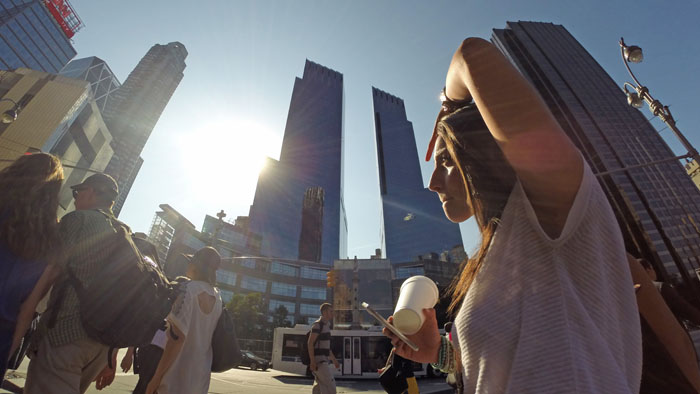
Columbus Circle, 2014, photo by Fred Hatt

Columbus Circle, 2014, photo by Fred Hatt

If you’ve followed my urban landscape photography on Drawing Life you’ve noticed that I rarely take pictures of strangers. I’m not quite aggressive enough to shoot right at people without permission, and usually not quite socially dauntless enough to chat them up and get their consent. I found that the GoPro is so small – about half the size of a deck of playing cards – that I could just carry it around in one hand and no one even noticed it, even if I was taking their picture from inches away from them.

Rainy Day, 2013, photo by Fred Hatt

Rainy Day, 2013, photo by Fred Hatt

The ultra-wide view is good at capturing two spaces next to each other, an interior and an exterior space, or an opening from one space to another.

Stairs, 2014, photo by Fred Hatt

Stairs, 2014, photo by Fred Hatt

It dramatically emphasizes the converging lines of perspective.

Deli Flowers, 2014, photo by Fred Hatt

Deli Flowers, 2014, photo by Fred Hatt

The default capture settings produce images that are highly contrasty and colorful. I changed the settings to soften contrast, since these wide views often include areas that are shady and areas that are sunlit in the same frame.

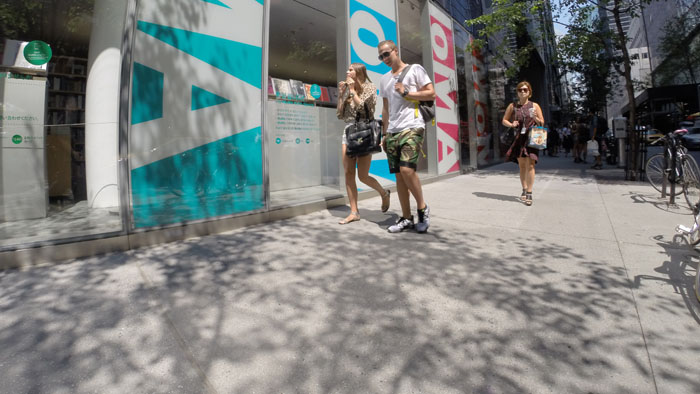
Mottled Shadows, 2014, photo by Fred Hatt

Mottled Shadows, 2014, photo by Fred Hatt

Many of these street views were shot while walking, holding the camera at hip level and not even pausing my stride. In bright daylight the shutter speed is fast enough that the images are sharp, but even overcast daylight makes the camera take a longer exposure that will often show motion blurring in these conditions.

Shades, 2014, photo by Fred Hatt

Shades, 2014, photo by Fred Hatt

In the wide angle view, perspective affects everything. Vertical shapes loom and converge toward the sky, while the horizon line veers like the deck of a sailboat listing in the wind.

Manhattan Couple, 2014, photo by Fred Hatt

Manhattan Couple, 2014, photo by Fred Hatt

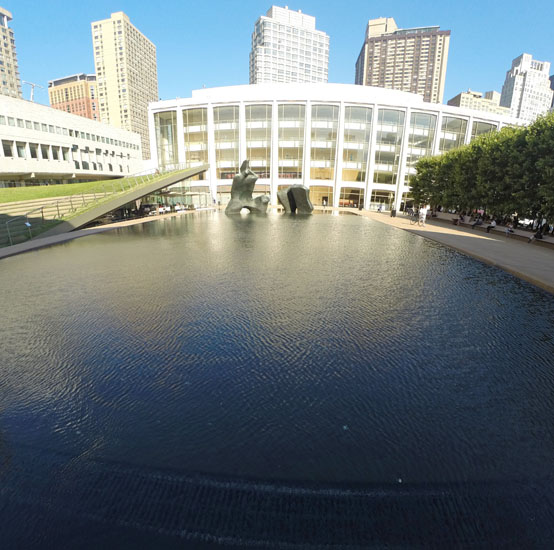
The image below shows the Henry Moore sculpture and reflecting pool at Lincoln Center, seen in another post on this blog in this very different shot (Comparing the shot at the link with the one below is an excellent illustration to contrast the different qualities of the wide angle lens and the narrow-angle telephoto lens). The exaggerated perspective of the GoPro makes it look like the sculpture is far, far away, across a great body of water.

Reflecting Pool, 2014, photo by Fred Hatt

Reflecting Pool, 2014, photo by Fred Hatt

Here’s the skyline of lower Manhattan seen from the ferry to Governors Island.

Ferry, 2014, photo by Fred Hatt

Ferry, 2014, photo by Fred Hatt

Here’s a street vendor selling matted magazine covers. The shot, taken from a distance of maybe one meter, shows the vendor, all three sides of his display, and the underside of his colorful dual parasols.

Vendor, 2014, photo by Fred Hatt

Vendor, 2014, photo by Fred Hatt

A house interior shows an entire hallway seen through a door, with doors on either side and at the end, and a stairway on the right.

Hallway, 2014, photo by Fred Hatt

Hallway, 2014, photo by Fred Hatt

These food carts are seen in the context of the street, the sidewalk, the surrounding buildings, and the pedestrians.

Street Food, 2014, photo by Fred Hatt

Street Food, 2014, photo by Fred Hatt

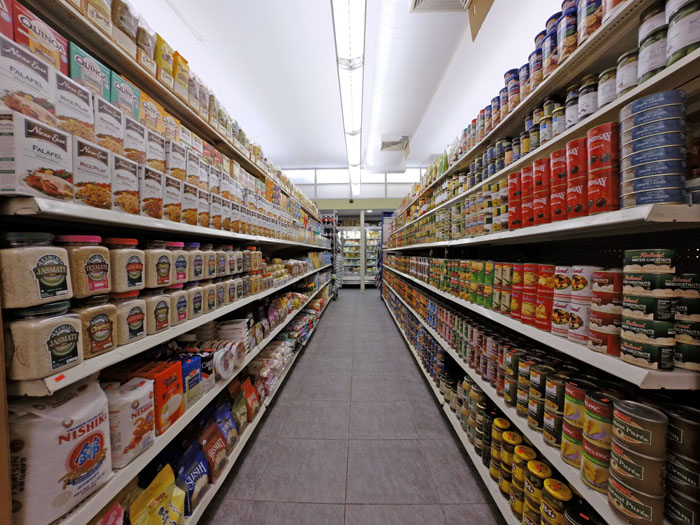
Only such a wide view really captures the feeling of being in a supermarket aisle between great walls of food.

Aisle, 2014, photo by Fred Hatt

Aisle, 2014, photo by Fred Hatt

One night I returned home to find my street with a great trench dug in it, and an SUV-sized boulder there on the right – did that come out from under the street?

Street Construction, 2014, photo by Fred Hatt

Street Construction, 2014, photo by Fred Hatt

And this was the truck they brought in to haul off that boulder.

Wide Load, 2014, photo by Fred Hatt

Wide Load, 2014, photo by Fred Hatt

The wide view shows the buildings surrounding the people. A vertical city expresses the aspirations of a vertical species.

Red Skirt, 2014, photo by Fred Hatt

Red Skirt, 2014, photo by Fred Hatt

An organization called the Sculptors Guild has a gallery in a huge old house on Governors Island. The rooms themselves are sculptural spaces.

Sculpture Show, 2014, photo by Fred Hatt

Sculpture Show, 2014, photo by Fred Hatt

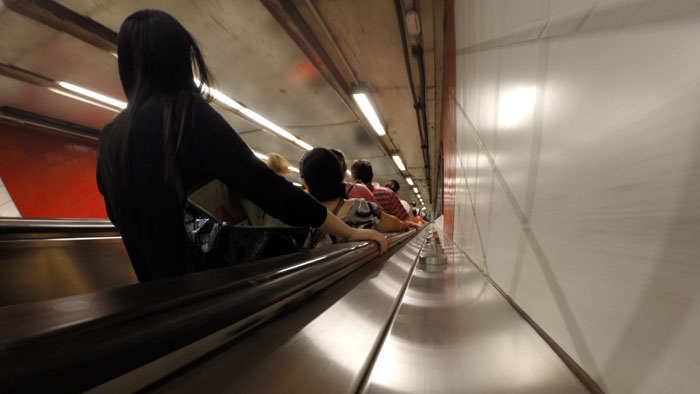
The wide view captures something of the sensation of being inside a space or being within surroundings.

Subway Escalator, 2014, photo by Fred Hatt

Subway Escalator, 2014, photo by Fred Hatt

Professional photographers these days tend to favor the narrow-angled telephoto lens, that isolates its subject and blurs the background. It eliminates distractions and distortions, and often has a glamorizing quality. The wide angle view has the opposite effect – emphasizing the distortions of perspective, seeing everything sharp both near and far, subjects not set apart but set within a whole scene.

Pretzels, 2014, photo by Fred Hatt

Pretzels, 2014, photo by Fred Hatt

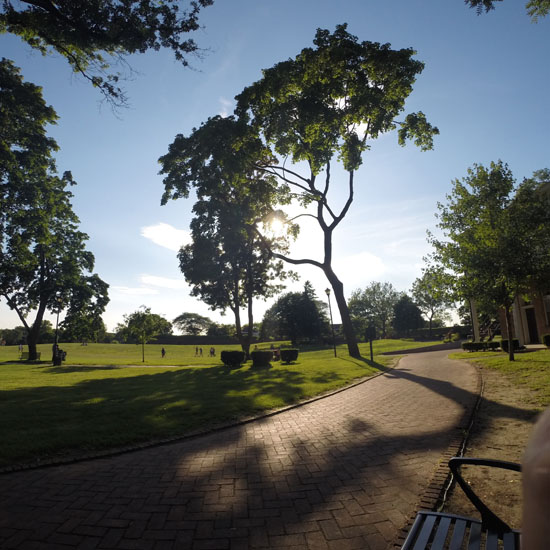
The narrow view is about objects. the wide view is about space.

Backlit Tree, 2014, photo by Fred Hatt

Backlit Tree, 2014, photo by Fred Hatt

The wide view is dynamic and expansive.

Photographer, 2014, photo by Fred Hatt

Photographer, 2014, photo by Fred Hatt

The practice of photography is a way of learning how to see the world. Different techniques, different approaches, and different lenses are different ways of seeing. Shooting with a wide angle lens makes me feel spaciousness. It is a curative for the feeling of being hemmed in by the density of the city.

Street Lines, 2014, photo by Fred Hatt

Street Lines, 2014, photo by Fred Hatt

We put ourselves in enclosures to move around in the world – private cars and public cars. The wide lens makes these interiors seem not like tight boxes, but like environments.

Self Portrait Driving, 2014, photo by Fred Hatt

Self Portrait Driving, 2014, photo by Fred Hatt

Subway Interior, 2014, photo by Fred Hatt

Subway Interior, 2014, photo by Fred Hatt

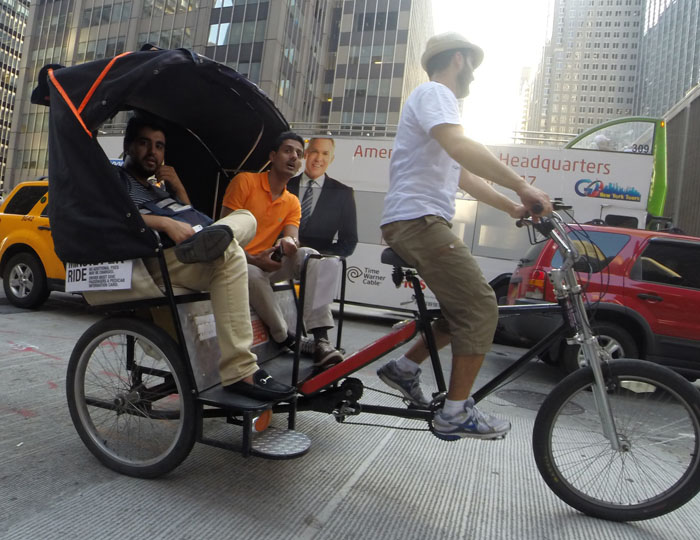
In a more open vehicle we feel ourselves moving among the motile masses and the massive monoliths of Manhattan.

Rickshaw, 2014, photo by Fred Hatt

Rickshaw, 2014, photo by Fred Hatt

There’s a foreground – individual people right around us. There’s a middle ground – the constant traffic that circulates in the city like blood. And there’s a background – blocks of buildings and the grid of gaps between them that channel all that hurly-burly.

Crosswalk, 2014, photo by Fred Hatt

Crosswalk, 2014, photo by Fred Hatt

Life is movement in space. Open your view wide to take it in.

Limo Driver, 2014, photo by Fred Hatt

Limo Driver, 2014, photo by Fred Hatt

Older Posts »

Powered by WordPress

Theme Tweaker by Unreal